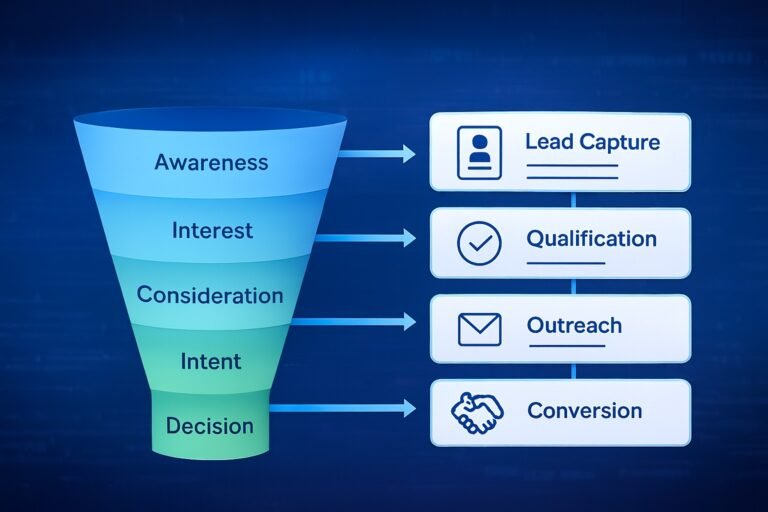
The 2026 AI-Driven B2B Marketing System: From Disconnected Tools to Unified Success

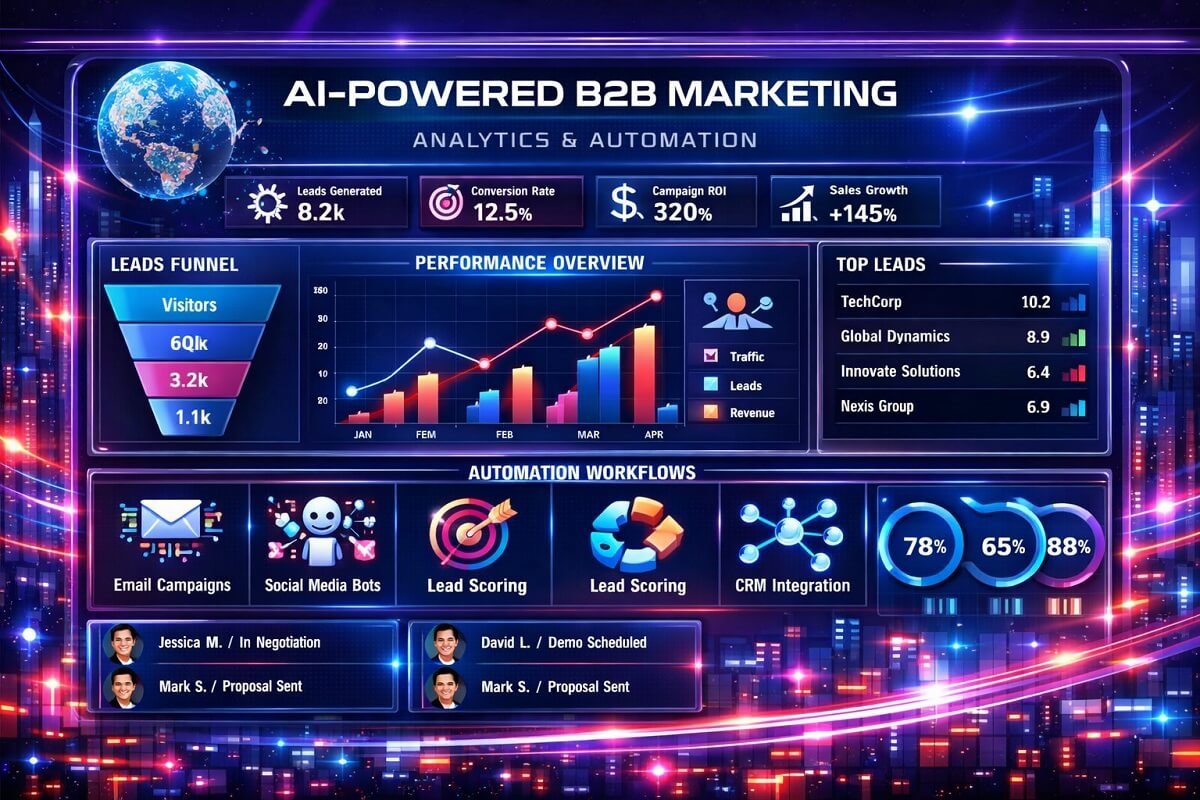
B2B marketing is evolving faster than ever. In 2026, businesses no longer rely on separate, disconnected tools for email campaigns, CRM, analytics, and content automation. Instead, AI-driven B2B marketing systems are reshaping how teams generate leads, engage prospects, and maximize ROI.
A unified AI marketing stack connects all these processes, reduces manual work, and provides actionable insights in real time. This article explores how organizations can move from fragmented tools to fully integrated AI-powered solutions.
Why AI Matters in B2B Marketing?
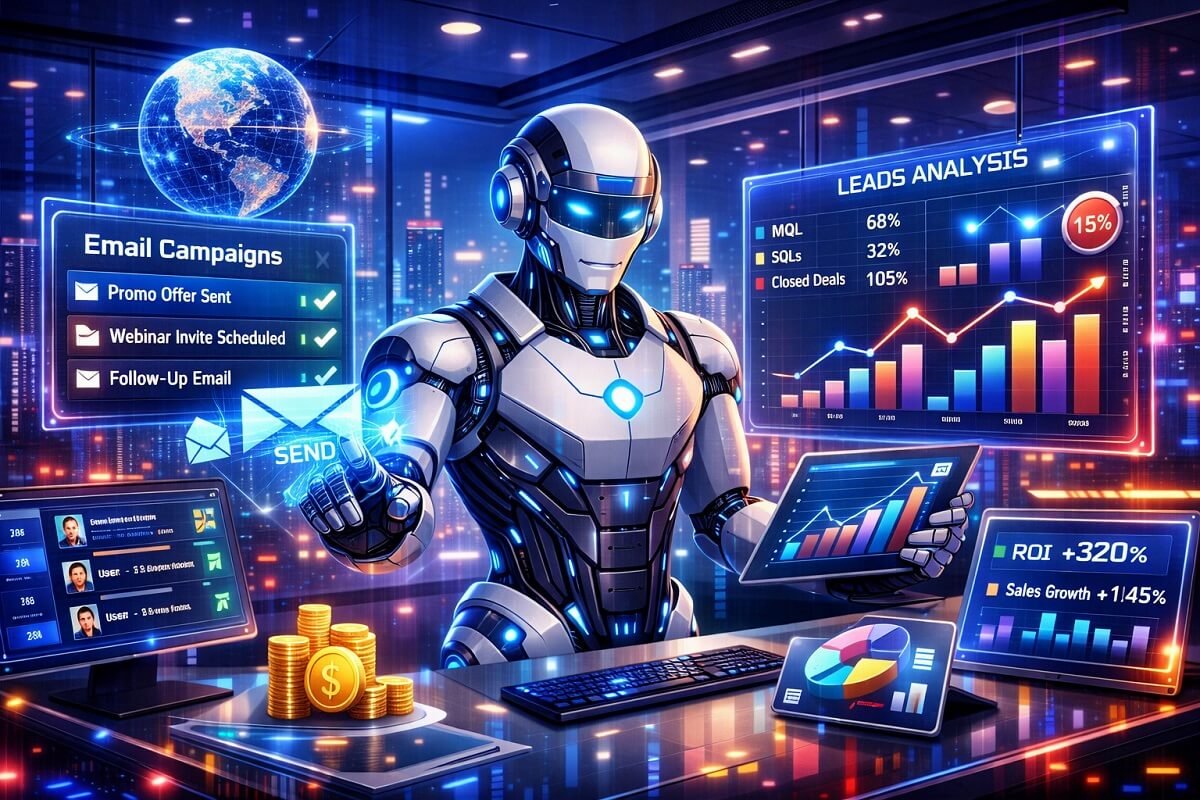
Artificial intelligence has shifted from a competitive advantage to a core requirement in modern B2B marketing. Platforms like HubSpot, Salesforce, and Adobe are already embedding AI deeply into their ecosystems. This signals a clear trend—manual marketing processes are no longer sustainable at scale.
Key Benefits of AI in B2B Marketing
Automated Campaign Execution
AI eliminates repetitive manual work such as:
- Email scheduling
- Lead nurturing workflows
- Ad optimization
Tools like Zapier and Make enable fully automated workflows across multiple platforms. This reduces human error and saves hours every week.
Personalization at Scale
AI analyzes behavioral data, browsing patterns, and engagement signals to deliver:
- Dynamic email content
- Personalized landing pages
- Product recommendations
This level of personalization was impossible before AI. It increases engagement and conversion rates significantly.
Predictive Analytics for Lead Scoring
Using machine learning, AI platforms can:
- Predict which leads are most likely to convert
- Identify churn risks
- Recommend next-best actions
This helps sales teams focus only on high-value prospects, improving efficiency.
Real-Time Data-Driven Decision Making
AI dashboards provide instant insights into:
- Campaign performance
- Customer journeys
- Funnel drop-offs
Marketers can quickly adjust strategies instead of waiting for end-of-month reports.
Impact of AI on B2B Marketing Performance
| Capability | Without AI | With AI |
| Campaign Execution | Manual | Automated |
| Personalization | Limited | Hyper-personalized |
| Lead Scoring | Guesswork | Predictive |
| Reporting | Delayed | Real-time |
| ROI Optimization | Reactive | Proactive |
👉 This transformation is why AI-driven systems are now central to high-performing B2B teams.
Problems with Disconnected Marketing Tools
Despite AI advancements, many businesses still rely on disconnected tools like Mailchimp, Google Analytics, and separate CRM systems. This fragmented setup creates major inefficiencies.
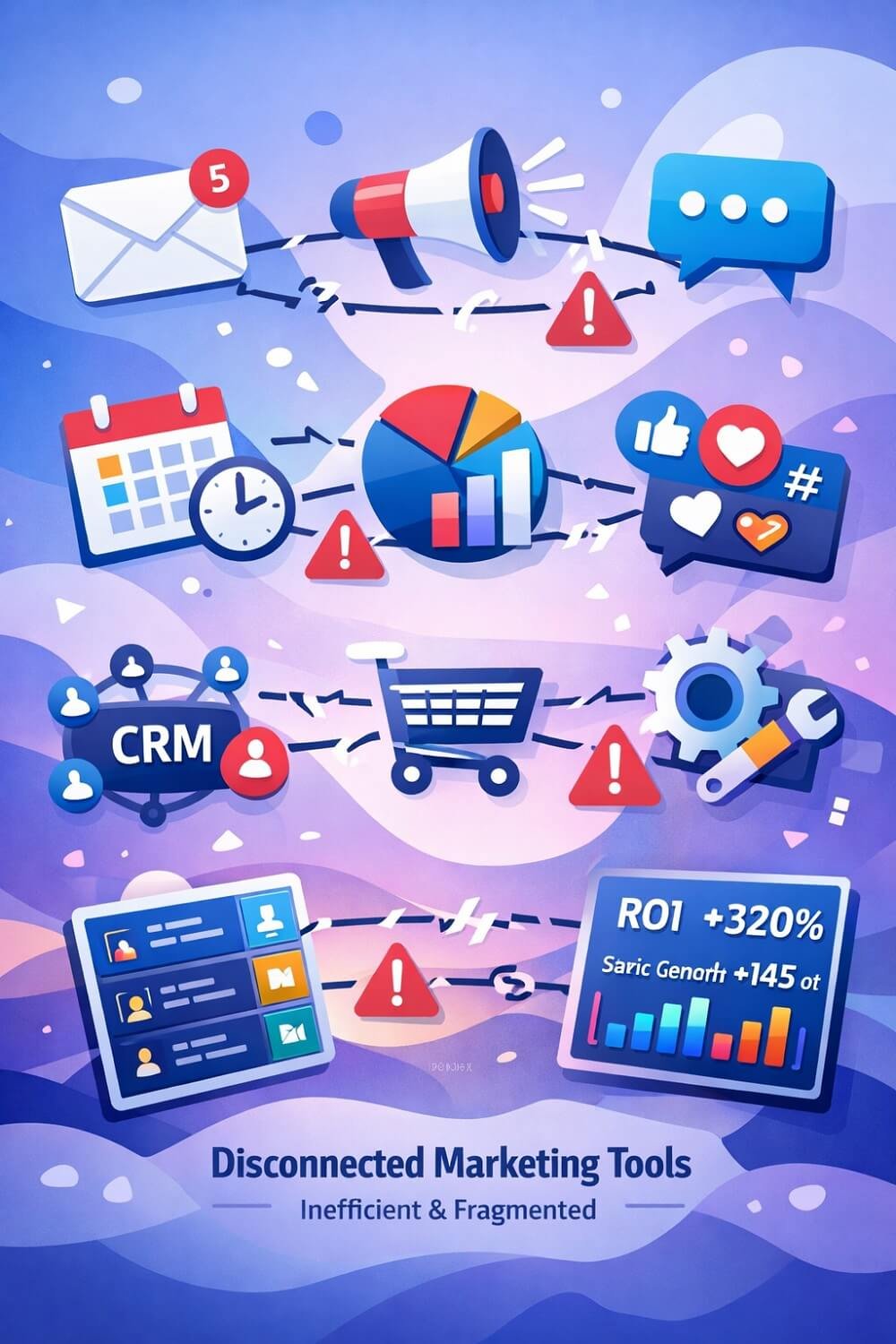
1. Data Fragmentation
Customer data is spread across:
- CRM platforms
- Email tools
- Ad platforms
- Analytics dashboards
This makes it difficult to build a single customer view, which is critical for personalization and targeting.
2. Inefficient Workflows and Time Loss
Marketers often:
- Switch between 5–10 tools daily
- Manually export and import data
- Rebuild the same reports in different systems
This wastes valuable time that could be spent on strategy and growth.
3. Inconsistent Customer Experience
Without integration:
- Messaging becomes inconsistent
- Customer journeys break
- Personalization fails
For example, a lead might receive irrelevant emails because the CRM isn’t synced with marketing automation.
4. Difficulty Measuring ROI
Disconnected tools make it hard to track:
- Attribution across channels
- True campaign performance
- Revenue impact
This leads to poor decision-making and wasted budget.
Comparison: Disconnected vs Unified Systems
| Factor | Disconnected Tools | Unified AI System |
| Data Access | Fragmented | Centralized |
| Workflow Efficiency | Low | High |
| Customer Experience | Inconsistent | Seamless |
| Reporting Accuracy | Limited | Comprehensive |
| Scalability | Difficult | Easy |
👉 These limitations are the main reason businesses are moving toward unified AI-driven platforms.
What an AI-Driven B2B Marketing System Is
An AI-driven B2B marketing system is a fully integrated ecosystem that combines automation, analytics, CRM, and personalization into one intelligent platform.
Instead of juggling multiple tools, businesses use a centralized solution powered by AI to manage the entire marketing lifecycle.
Core Components of an AI Marketing System
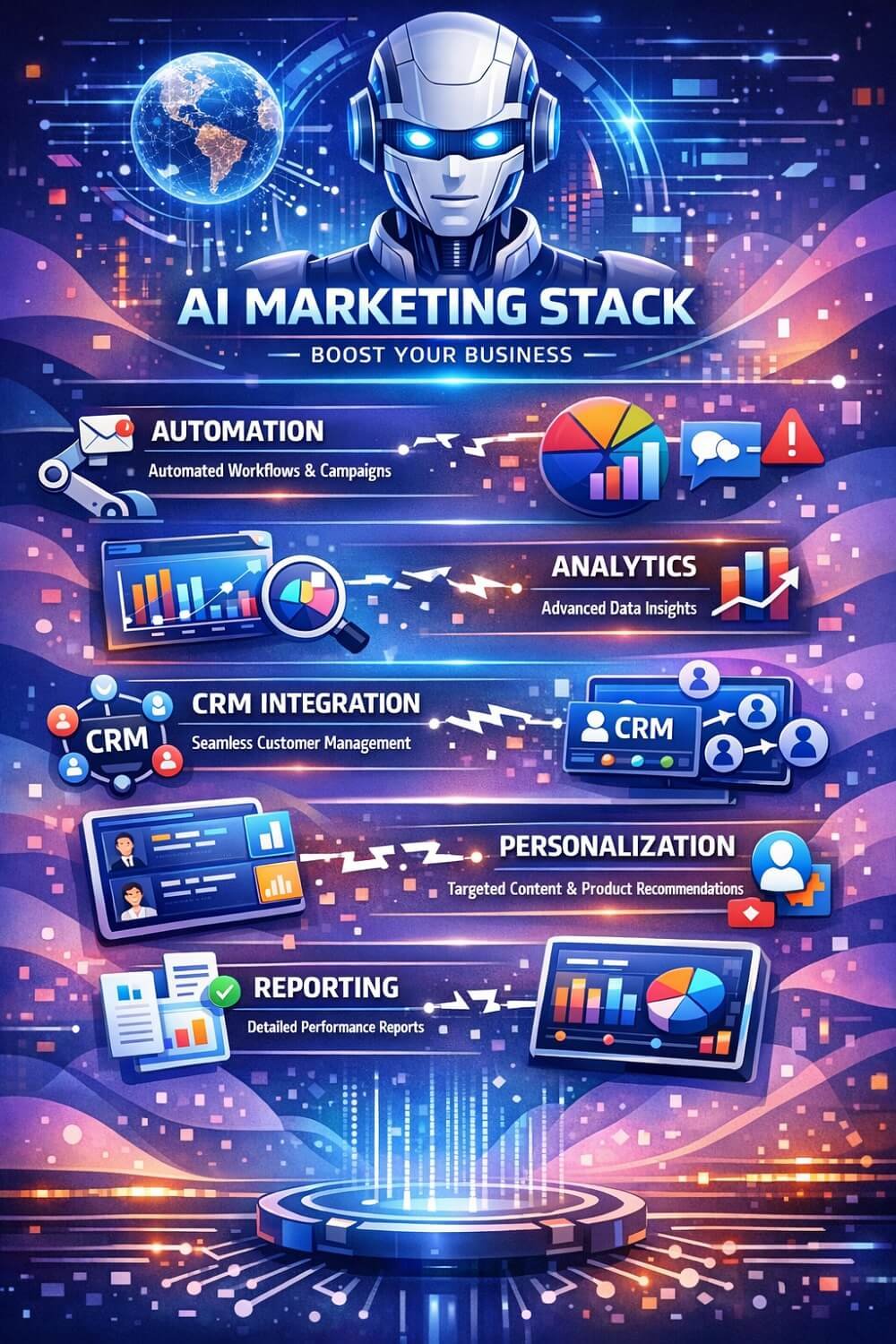
Marketing Automation Engine
AI automates:
- Email campaigns
- Lead nurturing sequences
- Multi-channel workflows
Platforms like n8n and ActiveCampaign enable advanced automation with minimal manual effort.
AI-Powered Analytics and Insights
AI processes massive datasets to:
- Identify trends
- Predict outcomes
- Recommend optimizations
This turns raw data into actionable insights.
CRM Integration
Integration with platforms like Salesforce ensures:
- Complete customer lifecycle tracking
- Better alignment between sales and marketing
- Improved lead management
Personalization Engines
AI dynamically adjusts:
- Email content
- Website experiences
- Product recommendations
Each prospect receives a tailored experience based on behavior and intent.
Unified Dashboard and Reporting
A centralized dashboard provides:
- Campaign performance metrics
- Funnel analytics
- ROI tracking
This eliminates the need for multiple reporting tools.
Architecture of an AI-Driven Marketing System
| Layer | Function |
| Data Layer | Collects and unifies customer data |
| AI Layer | Processes data and generates insights |
| Automation Layer | Executes workflows |
| Engagement Layer | Delivers personalized experiences |
| Analytics Layer | Tracks performance and ROI |
Core Features of a Unified AI Marketing Stack
A unified AI marketing stack is more than a collection of tools. It’s an interconnected system that combines automation, intelligence, and real-time decision-making into a single ecosystem. Leading platforms like HubSpot, Salesforce, and Adobe already demonstrate how powerful this integration can be.
Below are the core features that define a high-performing AI-driven B2B marketing system:
Advanced Automation Tools
Automation is the backbone of any AI marketing stack. It removes repetitive manual work and ensures campaigns run continuously without intervention.
What AI Automation Handles:
- Email sequences and drip campaigns
- Social media scheduling and posting
- Paid ad optimization (Google Ads, LinkedIn Ads)
- Lead nurturing workflows
Tools like Zapier, Make, and n8n allow businesses to connect multiple apps and automate complex workflows.
👉 Result: Faster execution, fewer errors, and scalable marketing operations.
Predictive Analytics and AI Intelligence
Predictive analytics transforms raw data into future-focused insights. Instead of reacting to results, marketers can act proactively.
Key Capabilities:
- Predict high-converting leads
- Forecast campaign performance
- Identify churn risks
- Recommend best timing and channels
AI models continuously learn from user behavior, improving accuracy over time.
👉 Example: AI can prioritize leads most likely to convert, allowing sales teams to focus on high-value opportunities.
Seamless CRM Integration
A unified marketing stack must integrate deeply with CRM systems like Salesforce or HubSpot.
Why This Matters:
- Centralized customer data
- Full visibility of the buyer journey
- Better alignment between marketing and sales
- Accurate lead tracking and scoring
Without CRM integration, even the best AI tools operate with incomplete data.
👉 Result: Stronger relationships and higher conversion rates.
AI-Powered Personalized Campaigns
Personalization is no longer optional in B2B marketing. AI enables hyper-personalization at scale, something manual systems cannot achieve.
What Gets Personalized:
- Email content and subject lines
- Landing pages and website experiences
- Product or service recommendations
- Ad creatives and messaging
AI analyzes:
- User behavior
- Engagement patterns
- Intent signals
👉 Result: Higher engagement, improved customer experience, and better ROI.
Advanced Reporting and Real-Time Analytics
Modern AI systems provide a unified dashboard with real-time insights across all channels.
Metrics You Can Track:
- Campaign performance
- Lead conversion rates
- Customer acquisition cost (CAC)
- Return on investment (ROI)
- Funnel drop-offs
Unlike traditional reporting, AI dashboards update instantly, allowing quick optimization.
👉 Result: Data-driven decisions without delays.
Choosing the Right AI Marketing Tools
Selecting the right tools is critical. Here’s a comparison of top AI-driven B2B marketing platforms in 2026:
| Tool / Platform | Key Features | Best For | Pricing (2026) | Integration Capabilities |
| HubSpot AI Marketing | Automation, CRM, analytics, personalization | SMBs & mid-market | Starts at $50/month | Salesforce, Slack, Zapier, Shopify |
| Salesforce Einstein | AI-driven lead scoring, predictive analytics | Enterprises | Custom pricing | HubSpot, Marketo, Microsoft Dynamics |
| Marketo Engage | Multi-channel campaigns, reporting, AI recommendations | Mid-market & Enterprise | Starts at $895/month | Salesforce, Microsoft Dynamics, Slack |
| ActiveCampaign AI | Email automation, predictive content, segmentation | SMBs | Starts at $49/month | Shopify, Zapier, WordPress |
| Drift AI Marketing | Conversational AI, chatbots, lead routing | Lead generation & sales teams | Starts at $400/month | Salesforce, HubSpot, Slack |
💡 Tip: Match the platform to your business size, budget, and integration requirements for maximum ROI.
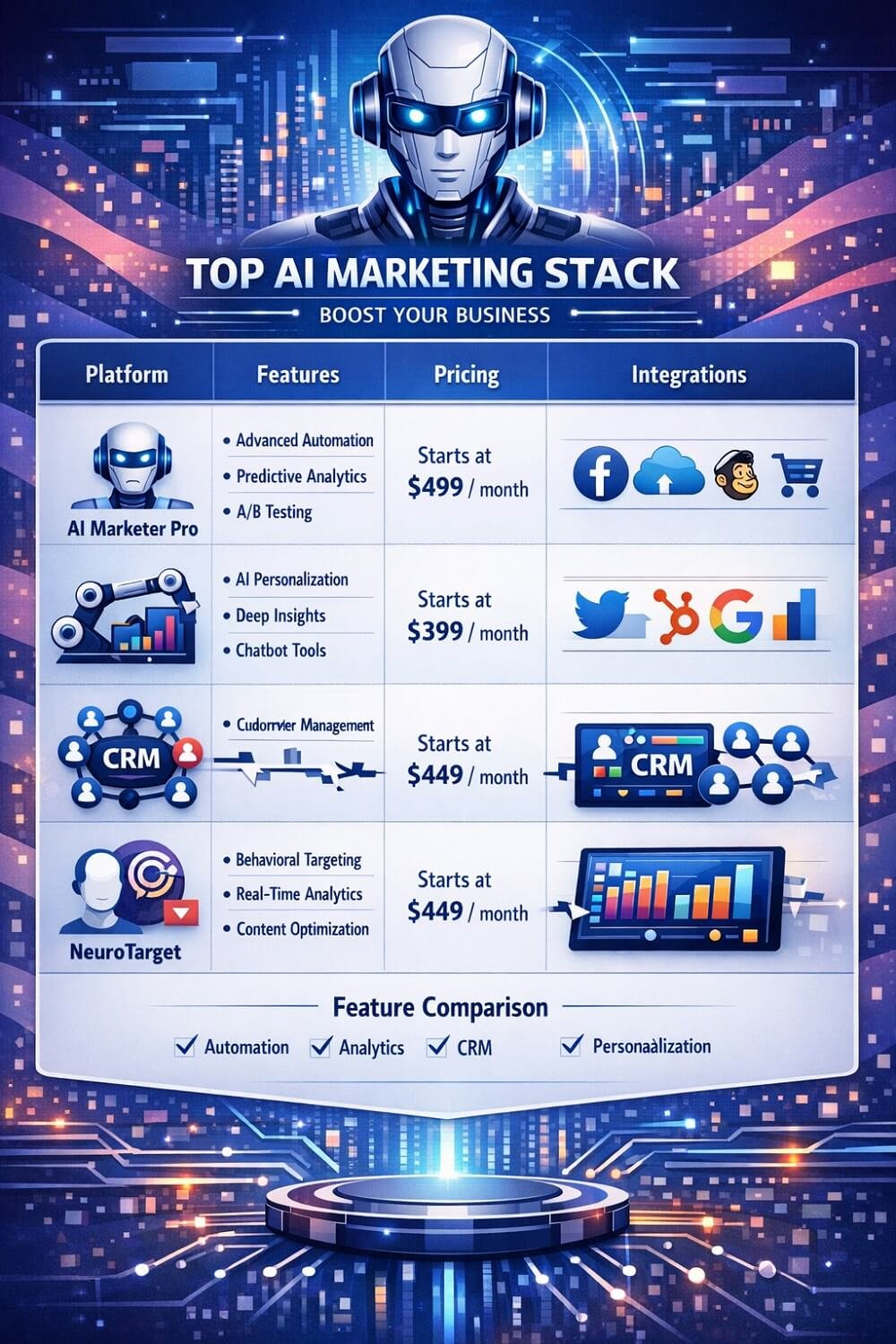
Implementing a Unified System
To implement an AI-driven marketing system:
- Audit Current Tools: Identify disconnected platforms and redundant processes.
- Define Objectives: Decide KPIs, automation needs, and data integration goals.
- Select AI Platform: Choose a system that meets your business size and integration needs.
- Integrate Systems: Connect CRM, email, analytics, and content platforms.
- Train Teams: Ensure marketing and sales teams understand AI workflows.
- Monitor & Optimize: Track performance metrics, adjust campaigns based on AI insights.
Measuring Success: KPIs & ROI
Measuring the impact of your AI marketing system is critical. Use these key metrics:
| KPI / Metric | Definition | Why It Matters | Target Benchmark (2026) |
| Lead Conversion Rate | % of leads converted to customers | Measures campaign effectiveness | 10–20% for B2B |
| Marketing ROI | Revenue generated vs. cost of marketing | Shows value of AI investment | 5:1 or higher |
| Engagement Rate | Interactions per email, ad, or content | Tracks audience interest | 20–35% average |
| Customer Acquisition Cost (CAC) | Total cost to acquire a customer | Helps optimize spend | <$1,000 per customer |
| Campaign Automation Efficiency | % of campaigns fully automated | Indicates AI system maturity | 70–90% automation |
Monitoring these KPIs ensures that your AI-driven system is delivering measurable business outcomes.
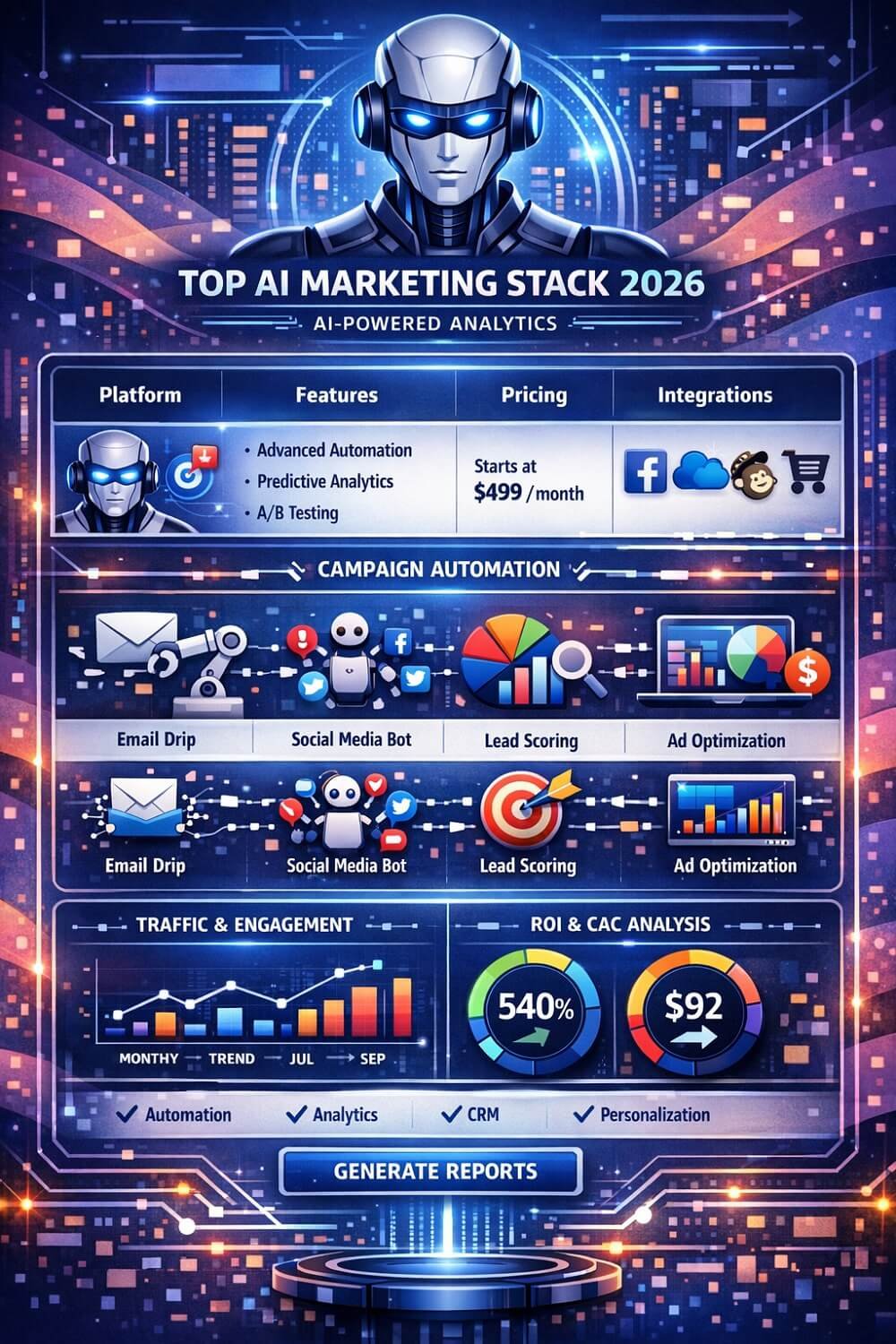
Future Trends in AI-Driven B2B Marketing (2026–2030 Outlook)
AI-driven B2B marketing is entering a new phase where automation is no longer the end goal—intelligence, prediction, and autonomy are. Leading platforms like Salesforce, HubSpot, and Google are already pushing toward fully integrated, self-optimizing systems.
Below are the key trends shaping the future of B2B marketing through 2030:
Hyper-Personalization at the Individual Level
Personalization is evolving beyond segments into true one-to-one marketing.
What’s Changing:
- AI will create dynamic content per user, not per audience group
- Websites will adapt in real time based on visitor behavior
- Email campaigns will adjust messaging instantly
AI systems analyze:
- Browsing behavior
- Purchase intent
- Engagement history
👉 Result: Every prospect experiences a completely tailored journey, increasing conversions and engagement.
Expansion of Conversational AI
Conversational AI is rapidly replacing traditional lead capture methods. Platforms like Drift and Intercom are already using AI-driven chatbots to qualify leads and guide users through funnels.
Future Capabilities:
- Handling complex sales conversations
- Booking meetings automatically
- Providing real-time product recommendations
- Acting as full-time virtual sales assistants
👉 Result: Faster response times and improved customer experience without increasing team size.
Predictive and Prescriptive Analytics
AI is moving beyond prediction into prescriptive decision-making.
What This Means:
- AI won’t just forecast outcomes
- It will recommend (and execute) the best actions
Examples:
- Identifying high-value leads before competitors
- Suggesting optimal campaign timing
- Automatically reallocating ad budgets
👉 Result: Marketers shift from reactive strategies to proactive growth systems.
Deep Cross-Platform Integration
Future AI systems will eliminate tool fragmentation entirely. As I mentioned earlier, tools like Zapier, Make, and n8n are already enabling multi-platform automation—but this is just the beginning.
What’s Nex
- Seamless integration across marketing, sales, and customer success
- Unified customer data across all touchpoints
- End-to-end lifecycle automation
👉 Result: A single system managing the entire revenue pipeline.
AI-Driven Content Creation and Optimization
AI tools are becoming core to content production.
Platforms like OpenAI are enabling:
- Automated blog writing
- Ad copy generation
- SEO optimization
- A/B testing at scale
Future Direction:
- Real-time content adaptation based on user behavior
- Fully automated campaign creation
- Continuous optimization without manual input
👉 Result: Faster content production with higher performance.
Privacy, Ethics, and Responsible AI
As AI adoption grows, data privacy and ethical marketing are becoming critical.
Key Focus Areas:
- Compliance with global privacy regulations
- Transparent data usage
- Bias-free AI decision-making
- Ethical personalization practices
Companies that fail to address these issues risk losing trust and facing regulatory challenges.
👉 Result: Ethical AI becomes a competitive advantage, not just a requirement.
Autonomous Marketing Systems (The Next Frontier)
The biggest shift is toward self-operating marketing systems.
What This Looks Like:
- AI creates, launches, and optimizes campaigns automatically
- Minimal human intervention
- Continuous performance improvement
👉 Result: Marketing teams move from execution to strategy and oversight.
Future Trends Comparison Table
| Trend | Current State (2026) | Future Direction (2030) |
| Personalization | Segment-based | 1:1 hyper-personalization |
| Chatbots | Basic automation | Full conversational AI assistants |
| Analytics | Predictive | Prescriptive + autonomous |
| Integration | Partial | Fully unified ecosystems |
| Content Creation | AI-assisted | Fully AI-generated & optimized |
| Ethics | Compliance-focused | Trust-driven competitive edge |
Conclusion & Next Steps
The move from disconnected tools to a unified AI-driven B2B marketing system is no longer optional. It drives efficiency, improves lead generation, and maximizes ROI. Start by evaluating your current tools, defining KPIs, and selecting a platform that fits your business. Implement, monitor, and optimize — and your marketing operations will become smarter, faster, and more profitable.
(FAQs) About AI-Driven B2B Marketing Systems
What is an AI-driven B2B marketing system?
An AI-driven B2B marketing system is a platform that integrates marketing automation, predictive analytics, personalization, and CRM into a single solution. It helps businesses generate leads, optimize campaigns, and improve ROI with minimal manual effort.
How does an AI marketing stack improve lead generation?
By analyzing data across multiple channels, AI identifies the most promising prospects, automates personalized campaigns, and predicts which leads are likely to convert, increasing the efficiency of your marketing team.
Which businesses benefit most from AI-driven marketing systems?
Both SMBs and large enterprises benefit. SMBs gain automation and insights without adding staff, while enterprises improve efficiency across multiple campaigns and business units.
How do I measure success with an AI marketing system?
Track KPIs such as lead conversion rate, marketing ROI, engagement rate, customer acquisition cost (CAC), and campaign automation efficiency. These metrics indicate the system’s performance and impact on revenue.
What features should I look for in a 2026 AI marketing platform?
Look for marketing automation, AI-powered analytics, CRM integration, personalized campaigns, multi-channel support, and centralized dashboards for real-time insights.