How to Build an AI-Driven B2B Marketing System (2026 Complete Guide)

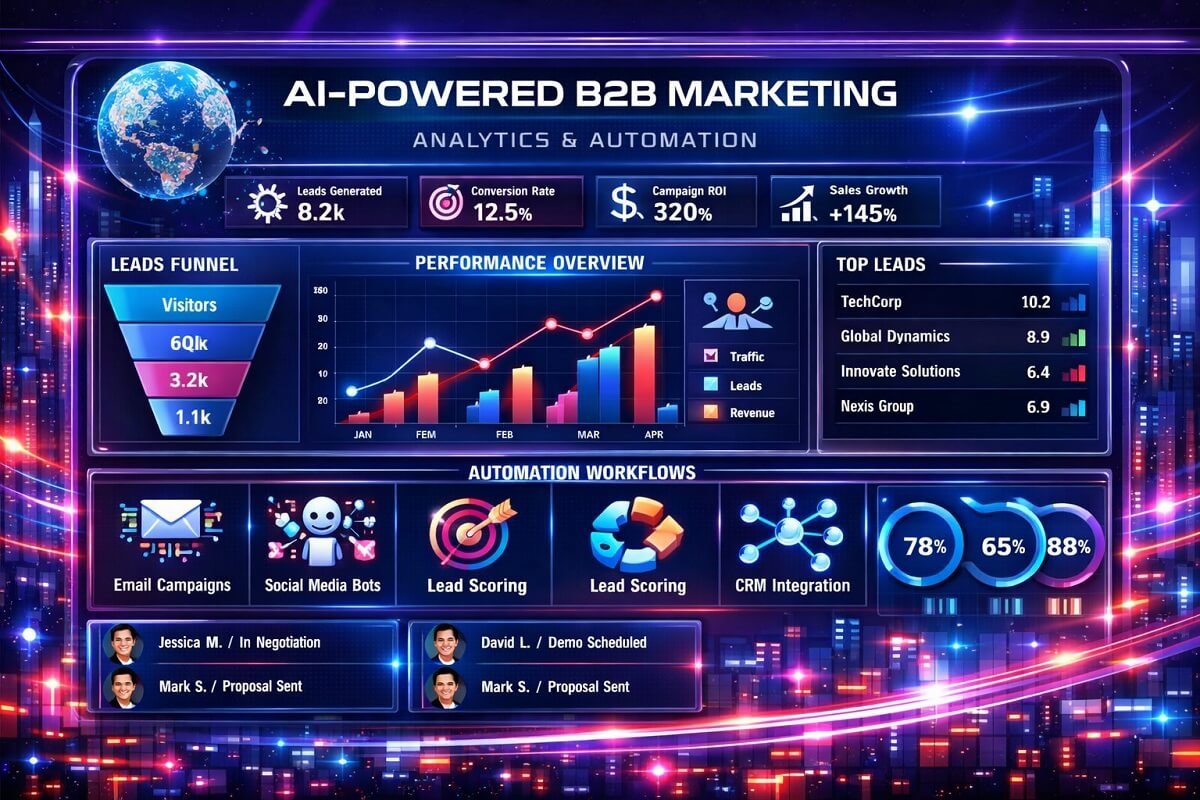
B2B marketing is evolving faster than ever. In 2026, businesses no longer rely on separate, disconnected tools for email campaigns, CRM, analytics, and content automation. Instead, AI-driven B2B marketing systems are reshaping how teams generate leads, engage prospects, and maximize ROI.
A unified AI marketing stack connects all these processes, reduces manual work, and provides actionable insights in real time.
In this guide you’ll learn:
- How to measure ROI
- What an AI-driven B2B marketing system is
- How AI marketing automation works
- How to build your own AI marketing workflow
- The best AI marketing tools
Table of Contents
What Is an AI-Driven B2B Marketing System?
An AI-driven B2B marketing system is an integrated marketing ecosystem that uses artificial intelligence to automate, optimize, and coordinate every stage of the B2B customer journey—from attracting prospects to nurturing leads, supporting sales, and measuring business results.
Compared traditional marketing setups where CRM software, email platforms, analytics tools, advertising channels, and content management systems operate independently, an AI-driven system connects these technologies into a unified workflow. Data flows automatically between platforms, allowing AI to analyze customer behavior, predict buying intent, personalize communications, and trigger automated actions without constant manual intervention.
At its core, the system combines several essential capabilities into a single operating framework, including:
- AI-powered marketing automation for repetitive tasks
- Customer relationship management (CRM) integration
- Predictive analytics and lead scoring
- Personalized content and customer experiences
- Multi-channel campaign management
- Real-time reporting and performance optimization
Rather than simply replacing manual work, AI continuously learns from campaign performance and customer interactions. As new data is collected, the system refines audience segmentation, improves targeting, recommends better marketing actions, and helps teams allocate resources more effectively.
This approach allows marketing and sales teams to work from the same data, reducing operational silos while creating a more consistent customer experience across every touchpoint.
Key Characteristics of an AI-Driven B2B Marketing System
| Characteristic | Description |
| Unified Customer Data | Consolidates information from CRM, website analytics, advertising platforms, and marketing tools into a centralized view. |
| Intelligent Automation | Automates repetitive marketing tasks while adapting workflows based on customer behavior and business rules. |
| Predictive Decision-Making | Uses machine learning to forecast lead quality, campaign outcomes, and customer engagement trends. |
| Personalization at Scale | Delivers relevant messages, content, and offers based on individual user behavior and intent. |
| Continuous Optimization | Monitors campaign performance in real time and identifies opportunities to improve conversions and marketing ROI. |
Instead of functioning as a collection of independent software tools, an AI-driven B2B marketing system acts as the central intelligence layer that connects marketing operations, customer data, automation workflows, and sales activities into a coordinated strategy. This unified approach enables businesses to scale marketing efforts more efficiently while making faster, data-informed decisions.
In the following sections, we’ll explore why AI has become essential for modern B2B marketing, the limitations of disconnected marketing tools, and the core components that make a unified AI-driven marketing system successful.
How AI Changes the Modern B2B Marketing Funnel
The traditional B2B marketing funnel relied heavily on manual processes, broad audience targeting, and delayed performance analysis. Marketing teams often spent significant time qualifying leads, managing campaigns, and interpreting reports before making strategic decisions.
An AI-driven B2B marketing system transforms this process by embedding artificial intelligence throughout the entire customer journey. Rather than treating each stage of the funnel as a separate activity, AI connects them into a continuous, data-driven workflow that adapts in real time based on customer behavior.
As prospects interact with websites, emails, advertisements, webinars, or social media content, AI continuously analyzes these signals to identify intent, prioritize opportunities, and deliver more relevant experiences. This allows marketing and sales teams to respond faster while reducing manual effort.
How AI Supports Each Stage of the Funnel
| Funnel Stage | Traditional Approach | AI-Driven Approach |
| Awareness | Broad campaigns targeting large audiences | AI identifies high-value audiences using behavioral and intent data. |
| Lead Generation | Manual form collection and list building | AI captures, enriches, and qualifies leads automatically. |
| Lead Nurturing | Generic email sequences for all prospects | Personalized workflows adapt content based on engagement and buying signals. |
| Sales Qualification | Sales teams manually evaluate leads | AI prioritizes prospects using predictive lead scoring and customer data. |
| Conversion | Static offers and manual follow-up | AI recommends the best messaging, timing, and communication channels to improve conversions. |
| Customer Retention | Periodic campaigns and reactive support | AI predicts customer needs, identifies churn risks, and recommends retention strategies. |
From Reactive Marketing to Intelligent Decision-Making
One of the biggest differences between traditional marketing and AI-powered marketing is speed. Instead of waiting days or weeks to evaluate campaign performance, AI continuously monitors customer interactions and identifies patterns as they develop.
For example, if engagement begins to decline within a particular audience segment, AI can detect the trend early and recommend adjustments before campaign performance is significantly affected. Likewise, when certain content or channels generate stronger engagement, marketing teams can quickly allocate additional resources to maximize results.
This shift enables organizations to make decisions based on current customer behavior rather than historical reports alone.
Building a Connected Customer Journey
Modern buyers rarely follow a straight path from discovery to purchase. They visit multiple pages, download resources, attend webinars, interact with advertisements, and return several times before contacting a sales representative.
An AI-driven marketing system helps connect these interactions into a single customer journey by combining data from multiple touchpoints. This unified view provides marketing and sales teams with greater visibility into prospect engagement while ensuring that future communications remain relevant and consistent.
As a result, organizations can create smoother buying experiences, improve collaboration between marketing and sales, and identify opportunities for optimization throughout the customer lifecycle.
The following section explains why AI has become a fundamental requirement for modern B2B marketing and the business benefits driving widespread adoption.
Why AI Matters in B2B Marketing?
Artificial intelligence has shifted from a competitive advantage to a core requirement in modern B2B marketing. Platforms like HubSpot, Salesforce, and Adobe are already embedding AI deeply into their ecosystems. This signals a clear trend—manual marketing processes are no longer sustainable at scale.
Key Benefits of AI in B2B Marketing
Automated Campaign Execution
AI eliminates repetitive manual work such as:
- Email scheduling
- Lead nurturing workflows
- Ad optimization
Tools like Zapier and Make enable fully automated workflows across multiple platforms. This reduces human error and saves hours every week.
Personalization at Scale
AI analyzes behavioral data, browsing patterns, and engagement signals to deliver:
- Dynamic email content
- Personalized landing pages
- Product recommendations
This level of personalization was impossible before AI. It increases engagement and conversion rates significantly.
Predictive Analytics for Lead Scoring
Using machine learning, AI platforms can:
- Predict which leads are most likely to convert
- Identify churn risks
- Recommend next-best actions
This helps sales teams focus only on high-value prospects, improving efficiency.
Real-Time Data-Driven Decision Making
AI dashboards provide instant insights into:
- Campaign performance
- Customer journeys
- Funnel drop-offs
Marketers can quickly adjust strategies instead of waiting for end-of-month reports.
Impact of AI on B2B Marketing Performance
| Capability | Without AI | With AI |
| Campaign Execution | Manual | Automated |
| Personalization | Limited | Hyper-personalized |
| Lead Scoring | Guesswork | Predictive |
| Reporting | Delayed | Real-time |
| ROI Optimization | Reactive | Proactive |
👉 This transformation is why AI-driven systems are now central to high-performing B2B teams.
Problems with Disconnected Marketing Tools
Despite AI advancements, many businesses still rely on disconnected tools like Mailchimp, Google Analytics, and separate CRM systems. This fragmented setup creates major inefficiencies.
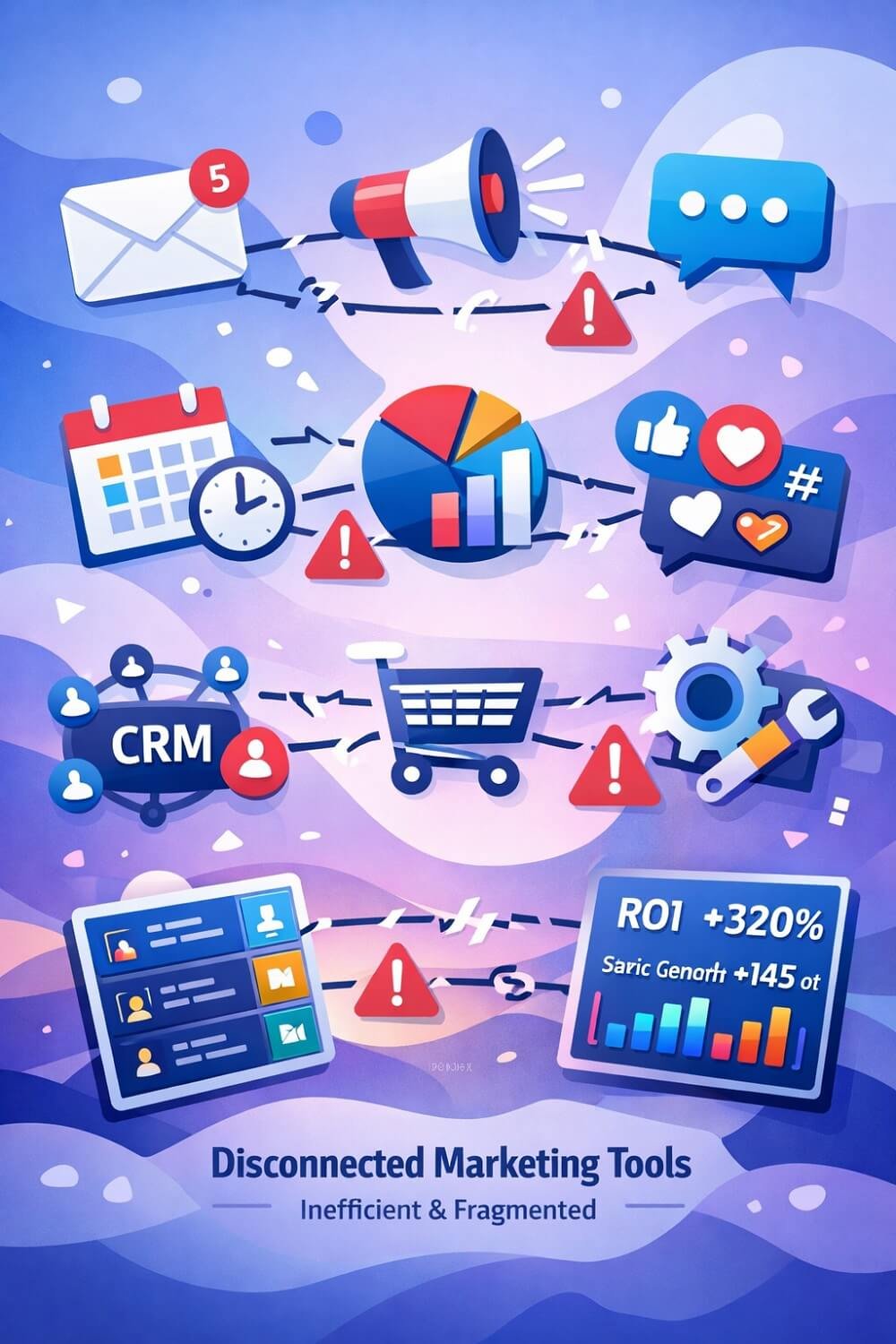
1. Data Fragmentation
Customer data is spread across:
- CRM platforms
- Email tools
- Ad platforms
- Analytics dashboards
This makes it difficult to build a single customer view, which is critical for personalization and targeting.
2. Inefficient Workflows and Time Loss
Marketers often:
- Switch between 5–10 tools daily
- Manually export and import data
- Rebuild the same reports in different systems
This wastes valuable time that could be spent on strategy and growth.
3. Inconsistent Customer Experience
Without integration:
- Messaging becomes inconsistent
- Customer journeys break
- Personalization fails
For example, a lead might receive irrelevant emails because the CRM isn’t synced with marketing automation.
4. Difficulty Measuring ROI
Disconnected tools make it hard to track:
- Attribution across channels
- True campaign performance
- Revenue impact
This leads to poor decision-making and wasted budget.
Comparison: Disconnected vs Unified Systems
| Factor | Disconnected Tools | Unified AI System |
| Data Access | Fragmented | Centralized |
| Workflow Efficiency | Low | High |
| Customer Experience | Inconsistent | Seamless |
| Reporting Accuracy | Limited | Comprehensive |
| Scalability | Difficult | Easy |
👉 These limitations are the main reason businesses are moving toward unified AI-driven platforms.
What an AI-Driven B2B Marketing System Is
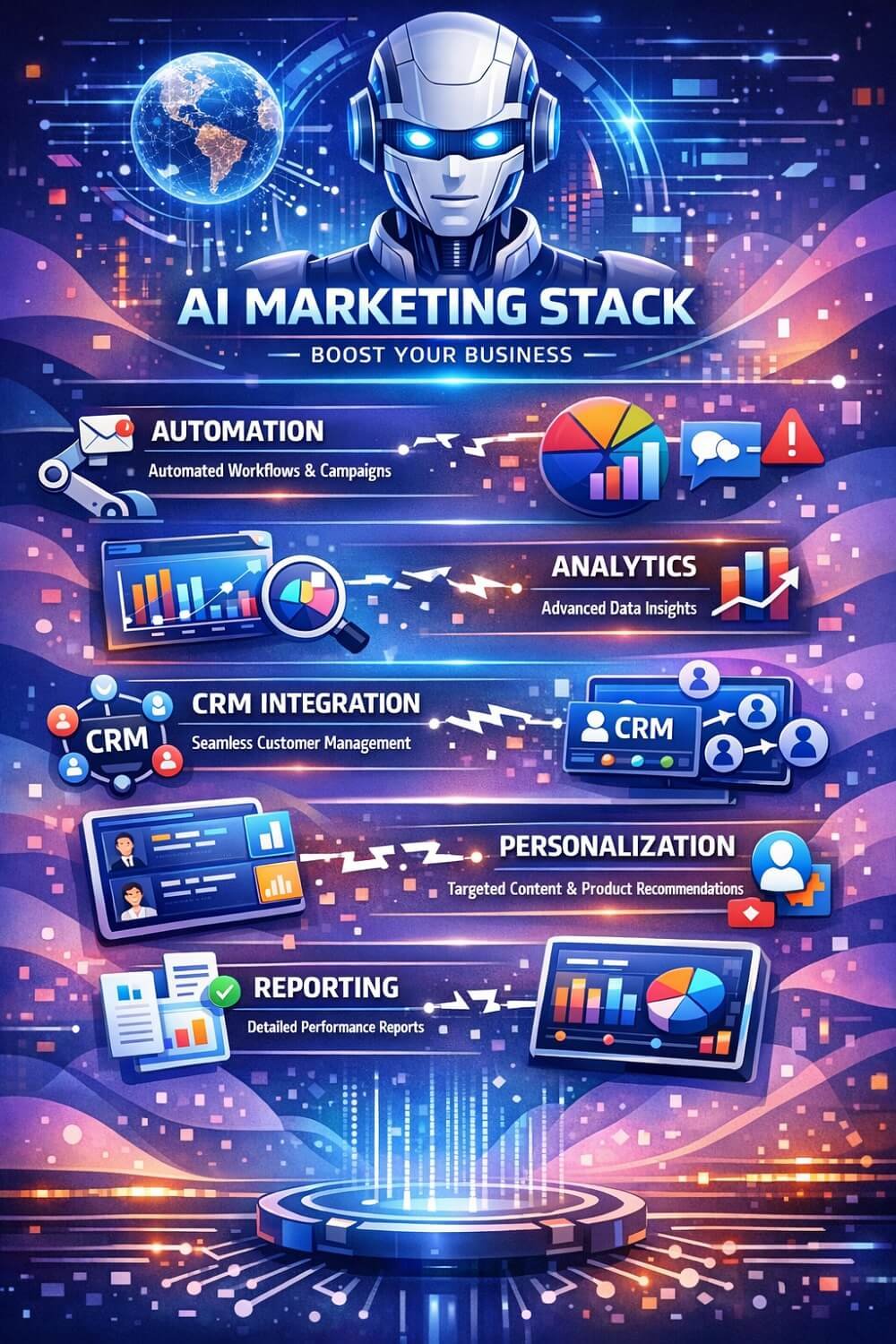
An AI-driven B2B marketing system is a fully integrated ecosystem that combines automation, analytics, CRM, and personalization into one intelligent platform. Instead of juggling multiple tools, businesses use a centralized solution powered by AI to manage the entire marketing lifecycle.
Core Components of an AI Marketing System
Marketing Automation Engine
AI automates:
- Email campaigns
- Lead nurturing sequences
- Multi-channel workflows
Platforms like n8n and ActiveCampaign enable advanced automation with minimal manual effort.
AI-Powered Analytics and Insights
AI processes massive datasets to:
- Identify trends
- Predict outcomes
- Recommend optimizations
This turns raw data into actionable insights.
CRM Integration
Integration with platforms like Salesforce ensures:
- Complete customer lifecycle tracking
- Better alignment between sales and marketing
- Improved lead management
Personalization Engines
AI dynamically adjusts:
- Email content
- Website experiences
- Product recommendations
Each prospect receives a tailored experience based on behavior and intent.
Unified Dashboard and Reporting
A centralized dashboard provides:
- Campaign performance metrics
- Funnel analytics
- ROI tracking
This eliminates the need for multiple reporting tools.
Architecture of an AI-Driven Marketing System
| Layer | Function |
| Data Layer | Collects and unifies customer data |
| AI Layer | Processes data and generates insights |
| Automation Layer | Executes workflows |
| Engagement Layer | Delivers personalized experiences |
| Analytics Layer | Tracks performance and ROI |
- Understanding how modern AI workflows function across departments helps organizations build more scalable marketing operations.
Understanding the Architecture of an AI-Driven Marketing System
An AI-driven B2B marketing system functions as a connected ecosystem where information flows continuously between multiple business applications. Rather than operating as isolated software, each layer performs a specialized role while sharing data with the others to support faster and more accurate decision-making.
A well-designed architecture ensures that customer information is collected once, processed intelligently, and used consistently across every marketing and sales activity. This reduces duplicate work, improves data quality, and allows automation to respond immediately as customer behavior changes.
1. Data Collection Layer
Every AI marketing system begins with reliable data. This foundational layer gathers information from multiple sources across the customer journey to create a complete picture of each prospect.
Common data sources include:
- Company websites and landing pages
- CRM platforms
- Email marketing software
- Advertising platforms
- Social media campaigns
- Webinar and event registrations
- Customer support interactions
- Product usage analytics
Instead of keeping this information in separate databases, modern marketing systems centralize it so that every department works from the same customer record.
2. Intelligence Layer
Once data has been collected, artificial intelligence analyzes it to uncover patterns that would be difficult to identify manually. Depending on the organization’s objectives, AI models may evaluate:
- Customer engagement trends
- Purchase intent signals
- Lead quality indicators
- Content performance
- Audience segmentation
- Conversion probabilities
This intelligence layer continuously learns from new interactions, allowing recommendations to become more accurate as additional data becomes available. Rather than replacing human decision-making, AI provides marketers with actionable insights that support faster and more informed strategic choices.
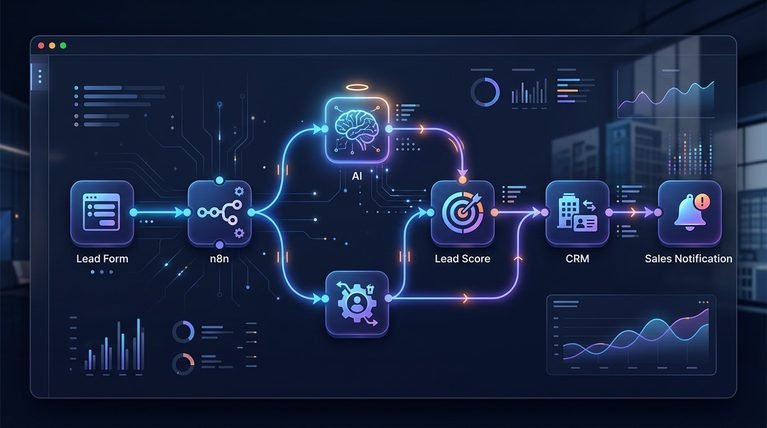
3. Workflow Orchestration Layer
After AI generates recommendations, workflow automation coordinates the appropriate business processes. Examples include:
- Assigning qualified leads to sales representatives
- Triggering personalized email sequences
- Updating CRM records automatically
- Scheduling follow-up activities
- Notifying sales teams of high-intent prospects
- Synchronizing customer information across connected applications
Because these workflows operate automatically, organizations reduce manual administration while maintaining consistent marketing operations across multiple channels.
4. Customer Engagement Layer
The engagement layer delivers personalized experiences based on the intelligence generated earlier in the process. Depending on customer behavior, the system may customize:
- Website messaging
- Email campaigns
- Educational content
- Product recommendations
- Chatbot conversations
- Advertising audiences
Since personalization is driven by real-time behavioral data, communications remain relevant throughout the buyer’s journey instead of relying on static audience segments.
5. Performance and Optimization Layer
The final layer measures business outcomes and continuously improves future marketing activities. Instead of simply producing historical reports, modern AI platforms evaluate performance metrics such as:
- Lead quality
- Pipeline contribution
- Campaign engagement
- Conversion rates
- Customer acquisition cost
- Marketing return on investment
These insights allow organizations to refine targeting strategies, improve campaign efficiency, and identify new growth opportunities without waiting for lengthy reporting cycles.
Furthermore, as organizations scale, integrating specialized asset management workflow software helps centralize digital assets, documentation, and operational resources across marketing and sales teams.
How the Layers Work Together
Although each architectural layer serves a different purpose, the greatest value comes from their integration. Customer data moves seamlessly from collection to analysis, automation, engagement, and measurement, creating a continuous improvement cycle.
As campaigns generate new customer interactions, the system captures additional data, updates AI models, refines automation workflows, personalizes future communications, and measures results. This ongoing feedback loop enables marketing teams to optimize performance over time while maintaining consistency across every customer touchpoint.
AI Marketing System Architecture at a Glance
| Architecture Layer | Primary Responsibility | Business Outcome |
| Data Collection | Consolidates customer information from multiple channels | Creates a unified customer profile |
| Intelligence | Analyzes behavior and predicts future actions | Supports smarter marketing decisions |
| Workflow Orchestration | Automates marketing and sales processes | Improves operational efficiency |
| Customer Engagement | Delivers personalized experiences | Increases engagement and conversions |
| Performance Optimization | Measures outcomes and identifies improvements | Maximizes ROI through continuous optimization |
Core Features of a Unified AI Marketing Stack
A unified AI marketing stack is more than a collection of tools. It’s an interconnected system that combines automation, intelligence, and real-time decision-making into a single ecosystem. Leading platforms like HubSpot, Salesforce, and Adobe already demonstrate how powerful this integration can be.
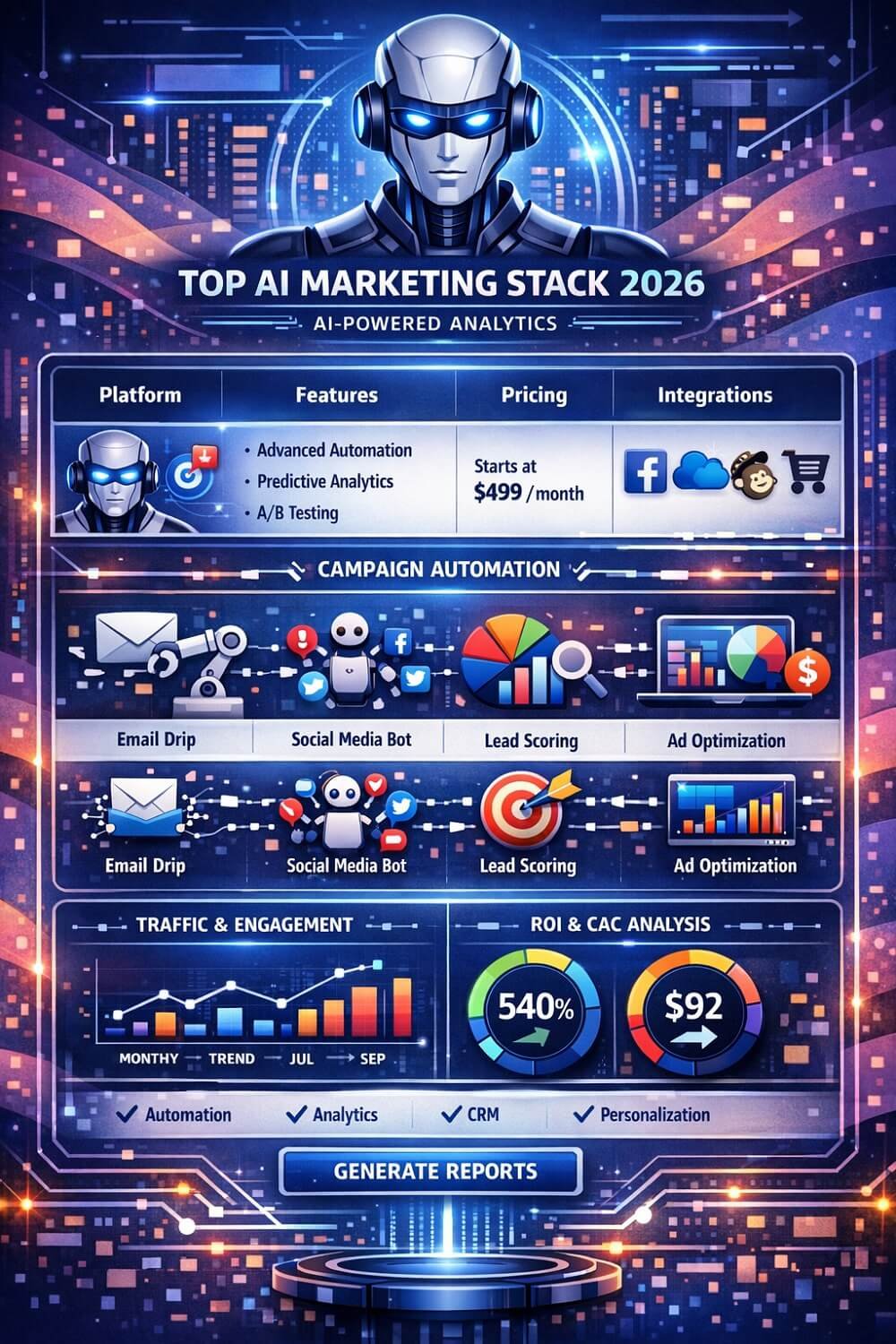
Below are the core features that define a high-performing AI-driven B2B marketing system:
Advanced Automation Tools
Automation is the backbone of any AI marketing stack. It removes repetitive manual work and ensures campaigns run continuously without intervention.
What AI Automation Handles:
- Email sequences and drip campaigns
- Social media scheduling and posting
- Paid ad optimization (Google Ads, LinkedIn Ads)
- Lead nurturing workflows
Tools like Zapier, Make, and n8n allow businesses to connect multiple apps and automate complex workflows.
👉 Result: Faster execution, fewer errors, and scalable marketing operations.
Predictive Analytics and AI Intelligence
Predictive analytics transforms raw data into future-focused insights. Instead of reacting to results, marketers can act proactively.
Key Capabilities:
- Predict high-converting leads
- Forecast campaign performance
- Identify churn risks
- Recommend best timing and channels
AI models continuously learn from user behavior, improving accuracy over time. For example: AI can prioritize leads most likely to convert, allowing sales teams to focus on high-value opportunities.
“Businesses looking to deepen their forecasting capabilities can explore how AI predictive analytics for B2B improves lead scoring, revenue forecasting, and customer lifetime value predictions.”
Seamless CRM Integration
A unified marketing stack must integrate deeply with CRM systems like Salesforce or HubSpot.
Why This Matters:
- Centralized customer data
- Full visibility of the buyer journey
- Better alignment between marketing and sales
- Accurate lead tracking and scoring
Without CRM integration, even the best AI tools operate with incomplete data.
👉 Result: Stronger relationships and higher conversion rates.
AI-Powered Personalized Campaigns
Personalization is no longer optional in B2B marketing. AI enables hyper-personalization at scale, something manual systems cannot achieve.
What Gets Personalized:
- Email content and subject lines
- Landing pages and website experiences
- Product or service recommendations
- Ad creatives and messaging
AI analyzes:
- User behavior
- Engagement patterns
- Intent signals
👉 Result: Higher engagement, improved customer experience, and better ROI.
Advanced Reporting and Real-Time Analytics
Modern AI systems provide a unified dashboard with real-time insights across all channels.
Metrics You Can Track:
- Campaign performance
- Lead conversion rates
- Customer acquisition cost (CAC)
- Return on investment (ROI)
- Funnel drop-offs
Unlike traditional reporting, AI dashboards update instantly, allowing quick optimization.
👉 Result: Data-driven decisions without delays.
Choosing the Right AI Marketing Tools
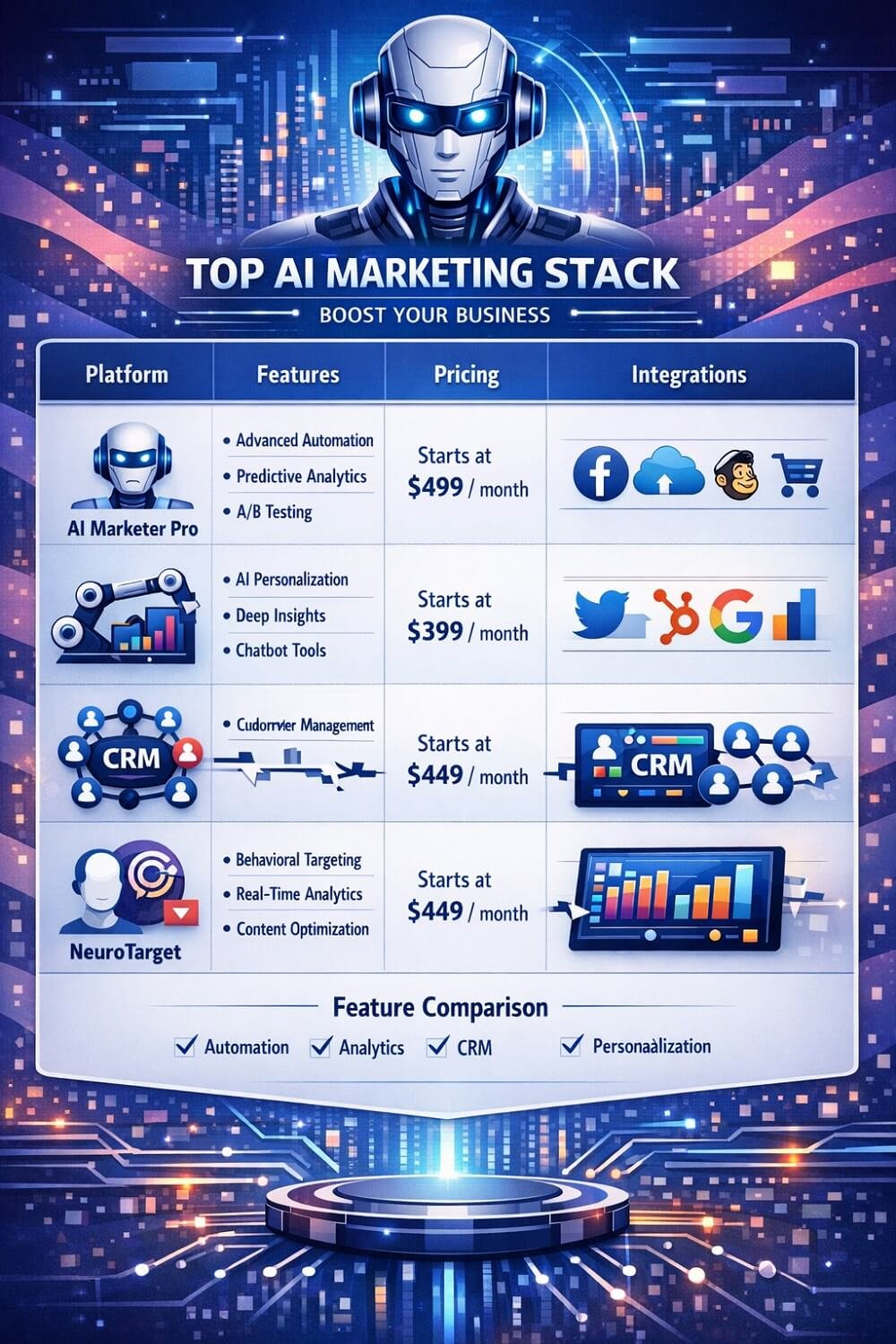
Selecting the right tools is critical. Here’s a comparison of top AI-driven B2B marketing platforms in 2026:
| Tool / Platform | Key Features | Best For | Pricing (2026) | Integration Capabilities |
| HubSpot AI Marketing | Automation, CRM, analytics, personalization | SMBs & mid-market | Starts at $50/month | Salesforce, Slack, Zapier, Shopify |
| Salesforce Einstein | AI-driven lead scoring, predictive analytics | Enterprises | Custom pricing | HubSpot, Marketo, Microsoft Dynamics |
| Marketo Engage | Multi-channel campaigns, reporting, AI recommendations | Mid-market & Enterprise | Starts at $895/month | Salesforce, Microsoft Dynamics, Slack |
| ActiveCampaign AI | Email automation, predictive content, segmentation | SMBs | Starts at $49/month | Shopify, Zapier, WordPress |
| Drift AI Marketing | Conversational AI, chatbots, lead routing | Lead generation & sales teams | Starts at $400/month | Salesforce, HubSpot, Slack |
💡 Tip: Match the platform to your business size, budget, and integration requirements for maximum ROI. If you’re still evaluating platforms, review our list of AI workflow tools we recommend based on real-world testing, integrations, and business use cases.
How to Build an AI-Driven B2B Marketing System
Understanding what an AI-driven B2B marketing system is only the first step. Successfully implementing one requires a structured approach that aligns technology, data, business objectives, and team processes. Rather than deploying multiple AI tools at once, organizations typically achieve better results by building their marketing ecosystem in stages.
The following framework provides a practical roadmap for developing an AI-powered marketing system that can evolve alongside your business.
Step 1: Evaluate Your Current Marketing Technology
Begin by documenting every platform involved in your marketing and sales process. This includes CRM software, email marketing platforms, analytics tools, advertising platforms, customer support systems, and content management solutions.
The objective is to identify where information becomes disconnected, which tasks are performed manually, and which processes create unnecessary delays. Understanding your current environment helps determine where artificial intelligence can provide the greatest operational value.
Step 2: Define Clear Business Objectives
Technology should support business outcomes rather than become the objective itself. Before introducing AI capabilities, establish measurable goals such as:
- Increasing qualified lead generation
- Improving campaign conversion rates
- Reducing manual marketing tasks
- Accelerating lead response times
- Improving marketing return on investment
Clearly defined objectives help prioritize automation initiatives while providing benchmarks for measuring future success.
Step 3: Organize and Prepare Customer Data
High-quality data is essential for reliable AI recommendations. Customer information should be reviewed for accuracy, consistency, and completeness before automation workflows are introduced.
Organizations often improve performance by:
- Removing duplicate contacts
- Updating outdated customer records
- Standardizing company and industry information
- Consolidating customer data from multiple sources
Well-structured data allows AI models to generate more accurate predictions and personalized customer experiences.
Step 4: Prioritize High-Impact Automation Opportunities
Instead of automating every marketing activity simultaneously, focus first on repetitive processes that consume significant time.
Common starting points include:
- Lead qualification
- Follow-up email sequences
- Contact segmentation
- Campaign scheduling
- Internal notifications
- Performance reporting
Launching a limited number of automation workflows makes it easier to monitor results and refine processes before expanding into more advanced use cases. Now, organizations can accelerate implementation by starting with proven AI workflow templates, which provide ready-made automation frameworks for common marketing, sales, and operational processes.
Step 5: Connect Marketing and Sales Workflows
Marketing automation delivers greater value when sales teams receive timely, relevant information. Establishing connected workflows allows qualified prospects, engagement history, and campaign interactions to move automatically between marketing and sales systems.
This improves collaboration while reducing delays that can occur when teams manage customer information independently. A connected workflow also provides greater visibility into how marketing activities contribute to pipeline growth and revenue generation.
Step 6: Measure, Learn, and Improve Continuously
An AI-driven marketing system should evolve as customer behavior and business priorities change. Regular performance reviews help identify opportunities to improve automation rules, audience targeting, campaign messaging, and operational efficiency.
Rather than viewing implementation as a one-time project, successful organizations treat AI marketing as an ongoing process of testing, learning, and optimization. Continuous refinement enables the system to deliver increasing value over time while adapting to new market conditions and customer expectations.
Implementation Roadmap
| Phase | Primary Objective | Expected Outcome |
| Assessment | Evaluate existing marketing processes and technology | Identify automation opportunities |
| Planning | Define business goals and implementation priorities | Create a structured adoption strategy |
| Data Preparation | Improve customer data quality and consistency | Build a reliable foundation for AI |
| Automation | Introduce high-impact automated workflows | Increase operational efficiency |
| Integration | Connect marketing and sales activities | Improve collaboration and customer visibility |
| Optimization | Monitor performance and refine workflows | Achieve continuous improvement and higher ROI |
Implementing a Unified System
To implement an AI-driven marketing system:
- Audit Current Tools: Identify disconnected platforms and redundant processes.
- Define Objectives: Decide KPIs, automation needs, and data integration goals.
- Select AI Platform: Choose a system that meets your business size and integration needs.
- Integrate Systems: Connect CRM, email, analytics, and content platforms.
- Train Teams: Ensure marketing and sales teams understand AI workflows.
- Monitor & Optimize: Track performance metrics, adjust campaigns based on AI insights.
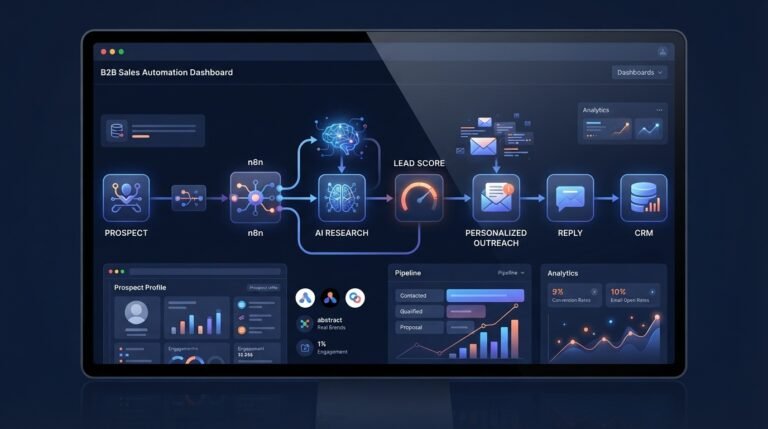
Many organizations create AI workflow diagrams during this stage to visualize data flows, identify bottlenecks, and plan integrations more effectively.
Measuring Success: KPIs & ROI
Measuring the impact of your AI marketing system is critical. Use these key metrics:
| KPI / Metric | Definition | Why It Matters | Target Benchmark (2026) |
| Lead Conversion Rate | % of leads converted to customers | Measures campaign effectiveness | 10–20% for B2B |
| Marketing ROI | Revenue generated vs. cost of marketing | Shows value of AI investment | 5:1 or higher |
| Engagement Rate | Interactions per email, ad, or content | Tracks audience interest | 20–35% average |
| Customer Acquisition Cost (CAC) | Total cost to acquire a customer | Helps optimize spend | <$1,000 per customer |
| Campaign Automation Efficiency | % of campaigns fully automated | Indicates AI system maturity | 70–90% automation |
Monitoring these KPIs ensures that your AI-driven system is delivering measurable business outcomes.
AI-Driven B2B Marketing System in Action: A Practical Example
Understanding the concepts behind an AI-driven marketing system is valuable, but seeing how they work together in a real business scenario makes implementation easier to visualize. The example below illustrates how a modern B2B organization can coordinate marketing and sales activities using a connected AI ecosystem.
Imagine a software company launching a new cloud security platform for enterprise customers.
Stage 1: Attract Qualified Prospects
The marketing team publishes educational content, industry reports, webinars, and search-optimized landing pages to attract decision-makers researching cybersecurity solutions. As visitors interact with this content, the marketing platform records valuable engagement signals such as:
- Pages viewed
- Content downloads
- Webinar registrations
- Newsletter subscriptions
- Returning website visits
Rather than treating these interactions independently, the system builds a progressively richer understanding of each prospect’s interests.
Stage 2: Identify Buying Intent
As engagement increases, artificial intelligence evaluates behavioral patterns that may indicate purchase intent.
Examples include:
- Multiple visits to solution pages
- Repeated comparisons of pricing information
- Attendance at product demonstrations
- Requests for technical documentation
- Increased interaction with case studies
These signals help marketing and sales teams prioritize prospects who appear to be moving closer to a purchasing decision.
Stage 3: Deliver Contextual Experiences
Instead of delivering identical communications to every contact, the marketing system adapts messaging according to each prospect’s interests and stage in the buying journey.
For example, one visitor may receive educational resources explaining implementation challenges, while another receives industry-specific success stories or invitations to product demonstrations.
This approach creates a more relevant customer experience without requiring marketers to manually manage dozens of separate campaigns.
Stage 4: Support Sales Engagement
When a prospect demonstrates sustained buying intent, marketing insights become available to the sales team. Rather than beginning every conversation without context, sales representatives can understand:
- Which resources the prospect viewed
- Topics generating the greatest interest
- Previous campaign interactions
- Areas requiring additional information
This shared visibility enables more informed and productive customer conversations.
Stage 5: Learn and Improve
After campaigns conclude, the organization reviews overall performance to identify opportunities for improvement.
Insights such as engagement trends, conversion patterns, and campaign effectiveness help refine future marketing strategies while improving the accuracy of future AI recommendations.
Over time, this continuous learning process allows the marketing system to become increasingly effective as additional customer interactions contribute new data.
Example Customer Journey
| Customer Activity | Business Response |
| Downloads an industry report | Records interest in a specific business challenge |
| Registers for a webinar | Expands the customer engagement profile |
| Returns to product comparison pages | Indicates growing purchase consideration |
| Requests additional product information | Marketing and sales coordinate follow-up activities |
| Schedules a product demonstration | Sales engagement becomes the primary focus |
| Becomes a customer | Marketing transitions toward onboarding and long-term relationship development |
Why This Matters
An AI-driven B2B marketing system is most effective when marketing, sales, and customer success teams work from shared customer insights rather than isolated activities. By connecting every interaction across the buyer journey, organizations create more relevant customer experiences while improving operational efficiency and supporting sustainable revenue growth.
Common Mistakes When Building an AI-Driven B2B Marketing System
Implementing an AI-driven B2B marketing system is not simply a matter of adopting new software. Long-term success depends on thoughtful planning, realistic expectations, and continuous optimization. Many organizations encounter similar challenges during adoption, but these issues can often be avoided with the right strategy.
1. Automating Poorly Designed Processes
Artificial intelligence can improve efficiency, but it cannot fix ineffective marketing processes. Automating outdated workflows often amplifies existing problems instead of solving them.
Before introducing AI, review current marketing activities, remove unnecessary steps, and standardize processes that consistently deliver value.
2. Focusing on Technology Instead of Business Goals
Organizations sometimes invest in advanced AI platforms without clearly defining what they want to achieve. As a result, teams implement features that add complexity without supporting measurable business outcomes.
Start with specific objectives such as improving lead quality, reducing campaign management time, increasing conversion rates, or strengthening customer retention. Technology should support these goals rather than become the goal itself.
3. Neglecting Data Quality
AI systems depend on accurate, complete, and well-organized data. Duplicate records, outdated customer information, and inconsistent data collection reduce the reliability of AI-generated insights and recommendations.
Regular data maintenance and governance help ensure that marketing decisions are based on trustworthy information.
4. Ignoring Cross-Team Collaboration
Marketing, sales, and customer success often rely on the same customer information. When departments work independently, valuable insights remain isolated and customer experiences become inconsistent.
Establishing shared processes, common performance metrics, and regular communication improves coordination throughout the customer lifecycle.
5. Expecting Immediate Results
AI implementation is an ongoing business initiative rather than a one-time project. Models improve as they learn from additional customer interactions, campaign performance, and operational feedback.
Organizations that continuously review performance, refine workflows, and adapt their strategies typically achieve stronger long-term results than those expecting instant transformation.
Quick Checklist to Avoid Common Pitfalls
| Common Mistake | Better Approach |
| Automating inefficient workflows | Improve and standardize processes before automation |
| Buying AI tools without clear objectives | Define measurable business goals first |
| Using incomplete or outdated customer data | Maintain clean, accurate, and centralized data |
| Operating marketing and sales independently | Encourage collaboration through shared customer insights |
| Expecting AI to deliver instant success | Continuously monitor, optimize, and refine marketing activities |
Key Takeaway
The most successful AI-driven B2B marketing systems combine intelligent technology with clear business objectives, reliable data, collaborative teams, and continuous improvement. Organizations that view AI as a long-term capability rather than a quick fix are better positioned to achieve sustainable marketing performance and revenue growth.
Future Trends in AI-Driven B2B Marketing (2026–2030 Outlook)
AI-driven B2B marketing is entering a new phase where automation is no longer the end goal—intelligence, prediction, and autonomy are. Leading platforms like Salesforce, HubSpot, and Google are already pushing toward fully integrated, self-optimizing systems.
Below are the key trends shaping the future of B2B marketing through 2030:
Hyper-Personalization at the Individual Level
Personalization is evolving beyond segments into true one-to-one marketing.
What’s Changing:
- AI will create dynamic content per user, not per audience group
- Websites will adapt in real time based on visitor behavior
- Email campaigns will adjust messaging instantly
AI systems analyze:
- Browsing behavior
- Purchase intent
- Engagement history
👉 Result: Every prospect experiences a completely tailored journey, increasing conversions and engagement.
Expansion of Conversational AI
Conversational AI is rapidly replacing traditional lead capture methods. Platforms like Drift and Intercom are already using AI-driven chatbots to qualify leads and guide users through funnels.
Future Capabilities:
- Handling complex sales conversations
- Booking meetings automatically
- Providing real-time product recommendations
- Acting as full-time virtual sales assistants
👉 Result: Faster response times and improved customer experience without increasing team size.
Predictive and Prescriptive Analytics
AI is moving beyond prediction into prescriptive decision-making.
What This Means:
- AI won’t just forecast outcomes
- It will recommend (and execute) the best actions
Examples:
- Identifying high-value leads before competitors
- Suggesting optimal campaign timing
- Automatically reallocating ad budgets
👉 Result: Marketers shift from reactive strategies to proactive growth systems.
Deep Cross-Platform Integration
Future AI systems will eliminate tool fragmentation entirely. As I mentioned earlier, tools like Zapier, Make, and n8n are already enabling multi-platform automation—but this is just the beginning.
What’s Nex
- Seamless integration across marketing, sales, and customer success
- Unified customer data across all touchpoints
- End-to-end lifecycle automation
👉 Result: A single system managing the entire revenue pipeline.
AI-Driven Content Creation and Optimization
AI tools are becoming core to content production.
Platforms like OpenAI are enabling:
- Automated blog writing
- Ad copy generation
- SEO optimization
- A/B testing at scale
Future Direction:
- Real-time content adaptation based on user behavior
- Fully automated campaign creation
- Continuous optimization without manual input
👉 Result: Faster content production with higher performance.
Privacy, Ethics, and Responsible AI
As AI adoption grows, data privacy and ethical marketing are becoming critical.
Key Focus Areas:
- Compliance with global privacy regulations
- Transparent data usage
- Bias-free AI decision-making
- Ethical personalization practices
Companies that fail to address these issues risk losing trust and facing regulatory challenges.
👉 Result: Ethical AI becomes a competitive advantage, not just a requirement.
Autonomous Marketing Systems (The Next Frontier)
The biggest shift is toward self-operating marketing systems.
What This Looks Like:
- AI creates, launches, and optimizes campaigns automatically
- Minimal human intervention
- Continuous performance improvement
👉 Result: Marketing teams move from execution to strategy and oversight.
“These capabilities are increasingly powered by advanced AI agent workflows that can analyze data, make decisions, and execute tasks with minimal human oversight.”
Future Trends Comparison Table
| Trend | Current State (2026) | Future Direction (2030) |
| Personalization | Segment-based | 1:1 hyper-personalization |
| Chatbots | Basic automation | Full conversational AI assistants |
| Analytics | Predictive | Prescriptive + autonomous |
| Integration | Partial | Fully unified ecosystems |
| Content Creation | AI-assisted | Fully AI-generated & optimized |
| Ethics | Compliance-focused | Trust-driven competitive edge |
Conclusion & Next Steps
The move from disconnected tools to a unified AI-driven B2B marketing system is no longer optional. It drives efficiency, improves lead generation, and maximizes ROI. Start by evaluating your current tools, defining KPIs, and selecting a platform that fits your business. Implement, monitor, and optimize — and your marketing operations will become smarter, faster, and more profitable.
If your team lacks the internal resources to design and deploy complex AI workflows, partnering with providers offering AI automation agency services can accelerate implementation while reducing deployment risks. And for readers who want to continue learning beyond this guide, these AI books for workflow automation cover automation strategy, business process optimization, and practical AI implementation in greater depth.
(FAQs) About AI-Driven B2B Marketing Systems
What is an AI-driven B2B marketing system?
An AI-driven B2B marketing system is a platform that integrates marketing automation, predictive analytics, personalization, and CRM into a single solution. It helps businesses generate leads, optimize campaigns, and improve ROI with minimal manual effort.
How does an AI marketing stack improve lead generation?
By analyzing data across multiple channels, AI identifies the most promising prospects, automates personalized campaigns, and predicts which leads are likely to convert, increasing the efficiency of your marketing team.
Which businesses benefit most from AI-driven marketing systems?
Both SMBs and large enterprises benefit. SMBs gain automation and insights without adding staff, while enterprises improve efficiency across multiple campaigns and business units. Many smaller companies are successfully using AI automation without hiring additional staff, allowing them to scale marketing operations while controlling costs.
How do I measure success with an AI marketing system?
Track KPIs such as lead conversion rate, marketing ROI, engagement rate, customer acquisition cost (CAC), and campaign automation efficiency. These metrics indicate the system’s performance and impact on revenue.
What features should I look for in a 2026 AI marketing platform?
Look for marketing automation, AI-powered analytics, CRM integration, personalized campaigns, multi-channel support, and centralized dashboards for real-time insights.