AI Automation Agency Services: How to Scale Revenue Faster

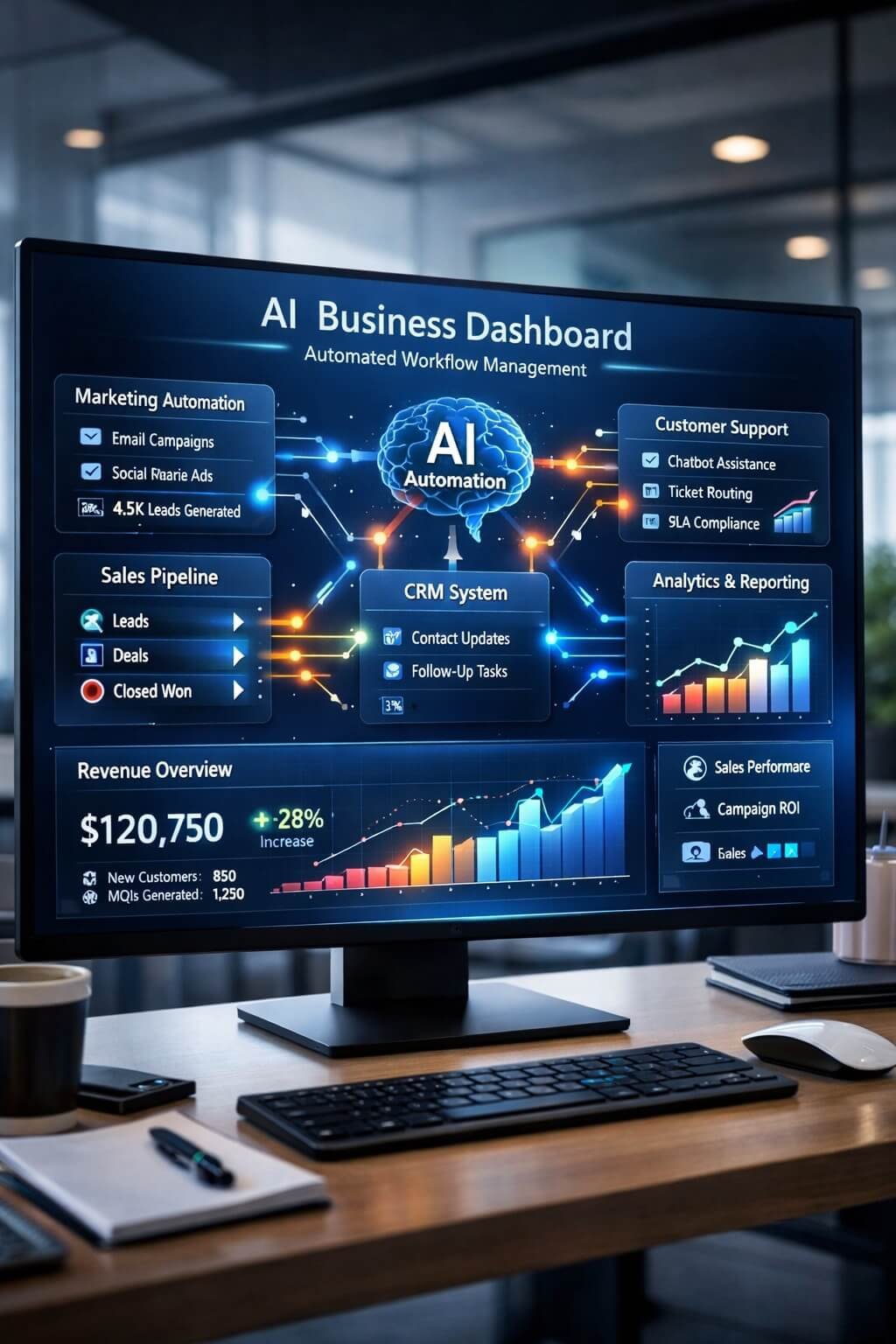
Businesses today face a common challenge: growing revenue without continuously increasing headcount, operational complexity, or administrative work. While artificial intelligence has become more accessible than ever, many organizations struggle to turn AI tools into measurable business results. This is where AI automation agency services come in.
Rather than simply implementing software, AI automation agencies help businesses design, build, and optimize systems that automate repetitive tasks, streamline operations, improve customer experiences, and support sustainable revenue growth. From lead management and sales workflows to customer support and reporting, these agencies create automated processes that allow teams to focus on higher-value work.
In this guide, we’ll explore what AI automation agency services include, how they help businesses scale, what industries benefit most, and how to choose the right agency partner.
What Are AI Automation Agency Services?
AI automation agency services involve designing and implementing business systems that use artificial intelligence and workflow automation to improve efficiency, reduce manual work, and support growth. Unlike traditional consultants who primarily provide recommendations, AI automation agencies handle strategy, implementation, integration, testing, optimization, and ongoing support.
Their goal is not simply to deploy AI tools. Instead, they create connected systems that improve how a business generates leads, manages customers, processes information, and makes decisions. An AI automation agency helps businesses:
- Automate lead capture and qualification
- Streamline customer onboarding
- Improve sales follow-up processes
- Build AI-powered customer support systems
- Automate reporting and analytics
- Connect disconnected software platforms
- Reduce operational bottlenecks
- Create scalable business workflows
The result is often a more efficient organization that can grow without proportionally increasing costs.
Why Businesses Hire AI Automation Agencies
Many companies already have access to AI tools. However, purchasing software is not the same as building a system that delivers consistent business outcomes.
Businesses often hire AI automation agencies because they need expertise in connecting multiple processes into a unified workflow. Following established workflow automation best practices helps ensure automations remain scalable, secure, and maintainable as businesses grow.
Common reasons include:
Limited Internal Resources
Most companies do not have dedicated automation specialists, AI engineers, workflow architects, and integration experts on staff.
An agency provides access to specialized expertise without requiring full-time hires.
Operational Inefficiencies
Manual processes often create delays, errors, and inconsistent customer experiences.
AI automation agencies identify these bottlenecks and design systems that eliminate repetitive tasks.
Faster Implementation
Building automation systems internally can take months of research, testing, and implementation.
Experienced agencies can accelerate deployment by using proven frameworks and methodologies.
Scalability
As businesses grow, manual processes become increasingly difficult to manage.
Automation enables organizations to handle larger workloads without significantly increasing operational costs.
Revenue Optimization
Well-designed automation systems can improve lead response times, increase conversion rates, and support more consistent customer engagement.
Core AI Automation Services Agencies Provide
Although service offerings vary, most agencies focus on several key areas.
Lead Generation and Qualification Automation
Lead management is one of the most common automation opportunities.
Agencies build systems that:
- Capture leads from multiple channels
- Enrich contact information
- Score leads automatically
- Route prospects to the correct team members
- Trigger personalized follow-up sequences
This reduces response times and ensures high-value opportunities receive immediate attention.
Sales Process Automation
Sales teams often spend significant time on administrative work.
Automation services may include:
- CRM updates
- Follow-up reminders
- Meeting scheduling
- Proposal generation
- Pipeline tracking
- Opportunity management
These systems help sales professionals spend more time selling and less time managing data.
Customer Support Automation
Modern customer support often combines human expertise with AI-powered assistance.
Agencies may implement:
- AI chat systems
- Knowledge-base assistants
- Ticket routing workflows
- Automated customer communications
- Self-service support solutions
This can improve response times while reducing support workloads.
Client Onboarding Automation
New client onboarding frequently involves repetitive administrative processes.
Automation can streamline:
- Welcome sequences
- Document collection
- Task creation
- Team notifications
- Project setup procedures
A smoother onboarding experience often improves customer satisfaction and retention.
Reporting and Analytics Automation
Many businesses spend hours each week creating reports.
AI automation agencies build systems that:
- Aggregate data from multiple platforms
- Generate dashboards automatically
- Deliver scheduled reports
- Monitor performance metrics
- Identify operational trends
This provides decision-makers with faster access to actionable insights.
Internal Operations Automation
Agencies also automate back-office processes such as:
- Data entry
- Approval workflows
- Documentation management
- Employee onboarding
- Internal communications
These improvements reduce administrative burden across departments.
AI Automation Services Comparison Table
While most agencies offer a mix of automation solutions, each service addresses a different business challenge. Understanding these differences can help organizations prioritize investments based on their growth objectives.
| Service | Primary Goal | Expected Business Outcome |
| Lead Generation Automation | Capture and organize prospects | More qualified leads |
| Lead Qualification Automation | Prioritize high-intent opportunities | Higher conversion rates |
| Sales Automation | Reduce administrative work | Increased sales productivity |
| Customer Support Automation | Improve response speed | Better customer satisfaction |
| Client Onboarding Automation | Streamline new customer setup | Faster time-to-value |
| CRM Automation | Maintain accurate customer data | Improved forecasting |
| Reporting Automation | Eliminate manual reporting | Faster decision-making |
| Workflow Integration Services | Connect business systems | Greater operational efficiency |
Businesses often achieve the strongest results when multiple automation services work together as part of a larger revenue system rather than isolated workflows.
How AI Automation Agencies Build Revenue Systems
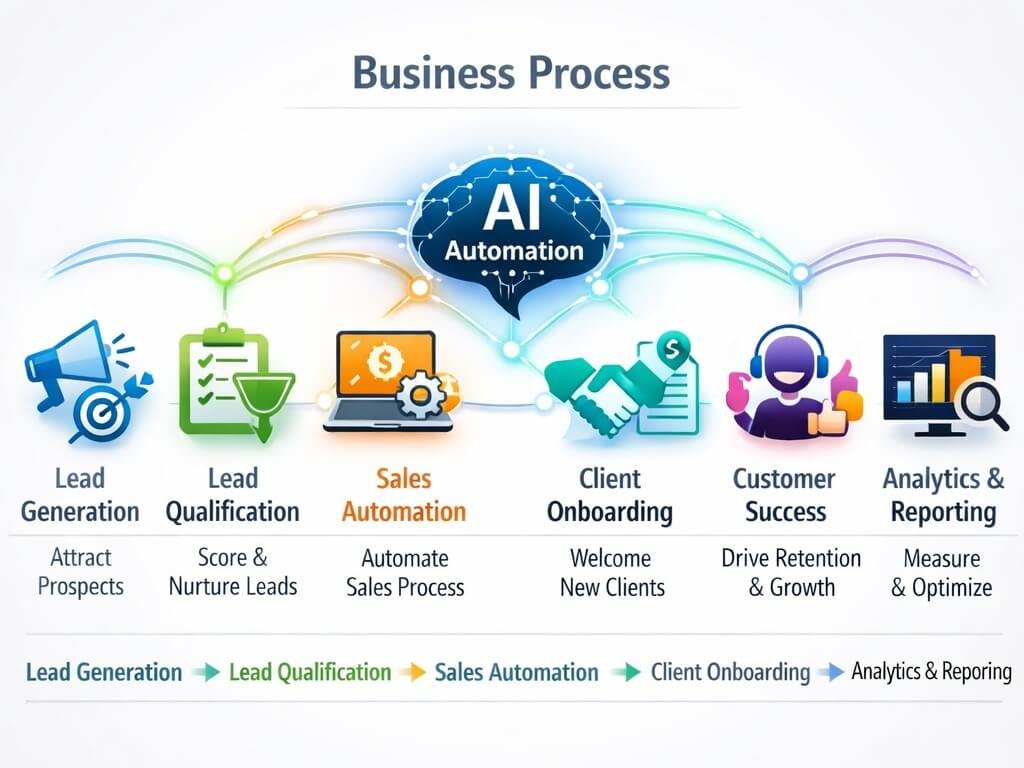
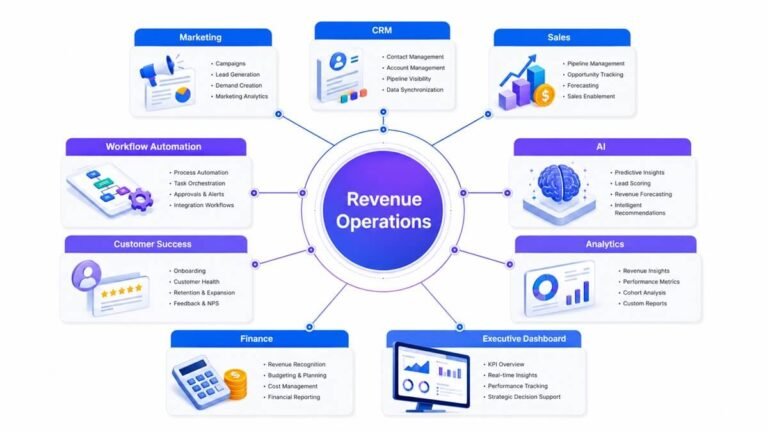
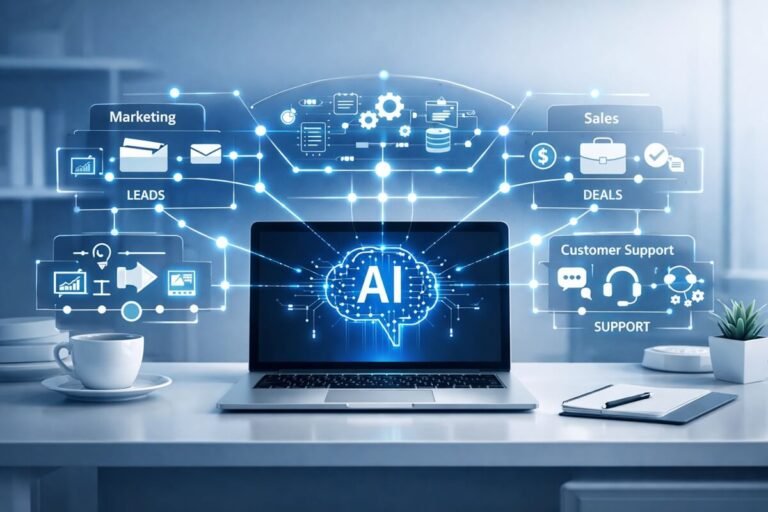
One of the most valuable services an agency provides is creating a revenue system rather than isolated automations. A revenue system connects marketing, sales, customer success, and operations into a coordinated process.
For example:
Revenue System Flow
A well-designed AI revenue system connects every stage of the customer journey into a seamless process.
Lead Generation → Lead Qualification → Sales Engagement → Client Onboarding → Customer Success → Reporting & Optimization
Instead of managing disconnected tools and spreadsheets, businesses gain a centralized workflow that improves visibility, accountability, and scalability. This connected approach helps ensure that valuable opportunities move efficiently from initial inquiry to long-term customer relationships.
Marketing
- Lead generation campaigns
- Form submissions
- Website inquiries
Qualification
- Lead scoring
- Data enrichment
- Prospect segmentation
Sales
- Automated follow-ups
- Appointment scheduling
- Pipeline management
Onboarding
- Contract processing
- Welcome workflows
- Account setup
Customer Success
- Support automation
- Renewal reminders
- Customer engagement programs
Reporting
- Revenue tracking
- Conversion analysis
- Performance monitoring
When these components work together, businesses gain visibility across the entire customer journey while reducing manual intervention.
The Typical AI Automation Agency Process
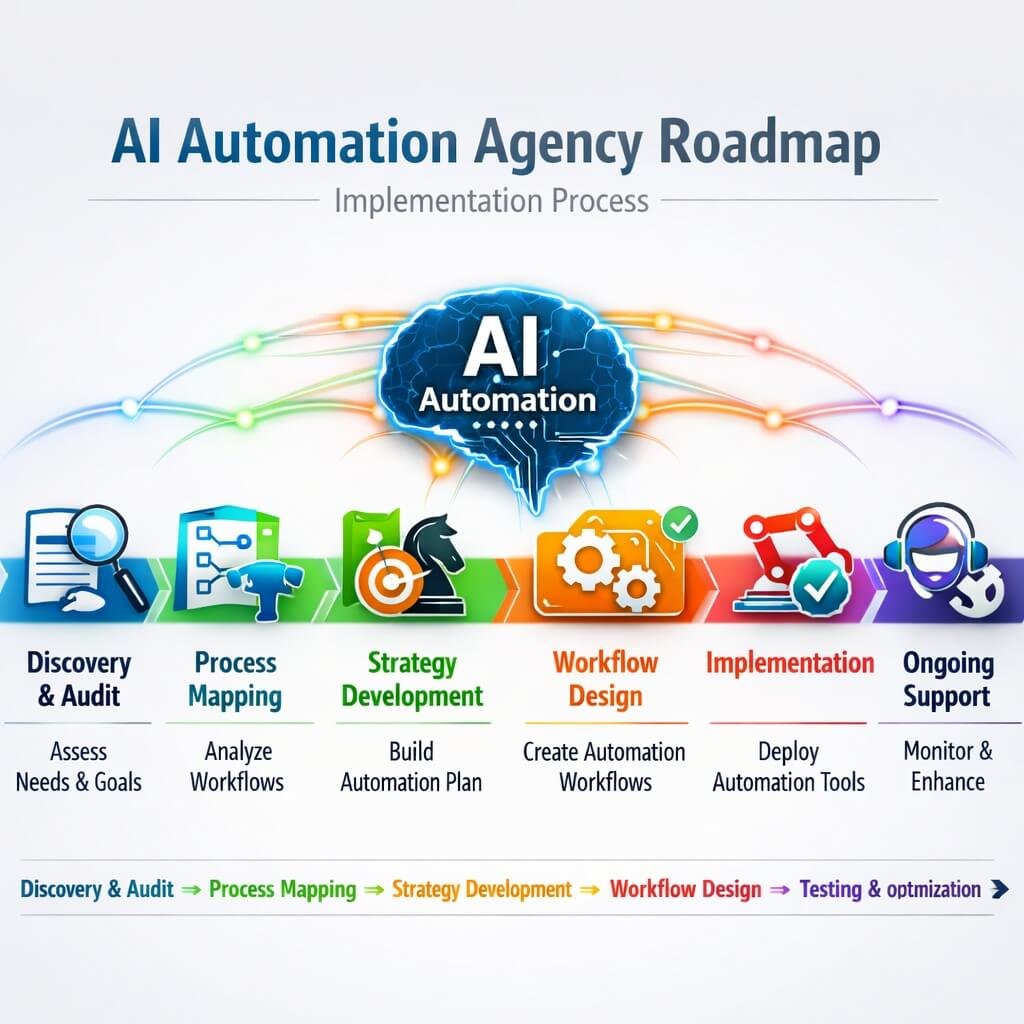
Most successful automation projects follow a structured approach.
1. Discovery and Assessment
The agency reviews existing workflows, software systems, business goals, and operational challenges.
2. Process Mapping
Current workflows are documented to identify bottlenecks, inefficiencies, and automation opportunities.
3. Strategy Development
The agency develops an automation roadmap aligned with business objectives.
4. System Design
New workflows, integrations, and AI-powered processes are designed. Choosing the right automation platform is equally important, and our comparison of Zapier vs Make vs n8n explains which solution best fits different business needs.
5. Implementation
Automation systems are built, tested, and integrated with existing tools. Many agencies use modern automation platforms to streamline implementation. If you’re interested in a practical example, see our guide to building AI automation workflows with n8n.
6. Testing and Optimization
Workflows are validated and refined to ensure reliability.
7. Ongoing Support
Many agencies continue monitoring performance and identifying opportunities for improvement.
AI Automation Agency vs DIY Automation
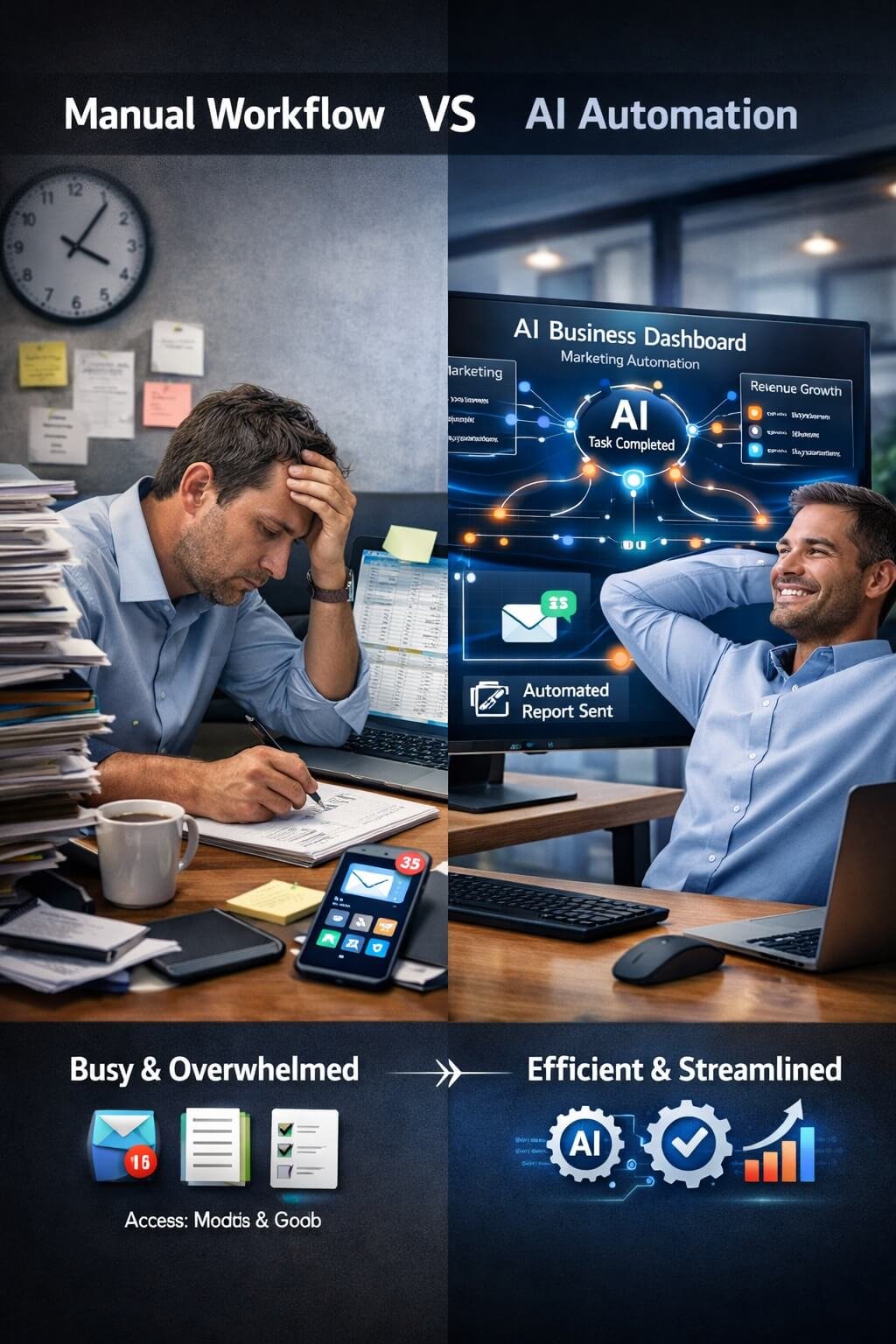
Many business owners initially explore automation using software platforms and internal resources. While DIY automation can work for simple workflows, scaling automation across multiple departments often requires specialized expertise.
| Factor | DIY Automation | AI Automation Agency |
| Initial Investment | Lower | Higher |
| Setup Speed | Slower | Faster |
| Technical Expertise | Required | Provided |
| Scalability | Limited | High |
| Support | Self-managed | Ongoing support available |
| Strategic Planning | Limited | Included |
When DIY Automation Makes Sense
DIY automation is often suitable for startups and small businesses that need simple workflows, such as automated email sequences, appointment scheduling, or basic CRM integrations.
When Hiring an Agency Makes Sense
Businesses with multiple teams, complex customer journeys, and significant growth objectives often benefit from professional implementation. Agencies can accelerate deployment, avoid costly mistakes, and build systems designed for long-term scalability.
Industries That Benefit Most From AI Automation Services
While nearly every industry can benefit from automation, some sectors often see particularly strong results.
SaaS Companies
Automation improves lead management, onboarding, customer support, and retention workflows.
Marketing Agencies
Agencies use automation to streamline client communication, reporting, and campaign management.
Professional Services
Consultants, legal firms, and financial service providers often automate intake, scheduling, and document management.
Healthcare Organizations
Administrative workflows, appointment coordination, and patient communications can be significantly improved through automation.
Real Estate Businesses
Automation supports lead nurturing, appointment scheduling, and client follow-up processes. For a deeper look at industry-specific strategies, explore our expert guide of the Best AI automation for real estate businesses.
Ecommerce Brands
Order processing, customer support, inventory updates, and marketing workflows can be automated at scale. Ecommerce companies managing large product catalogs may also benefit from using the PIM software for workflow automation to keep product information consistent across every sales channel.
Real-World Examples of AI Automation Services
Example 1: Automated Lead Management
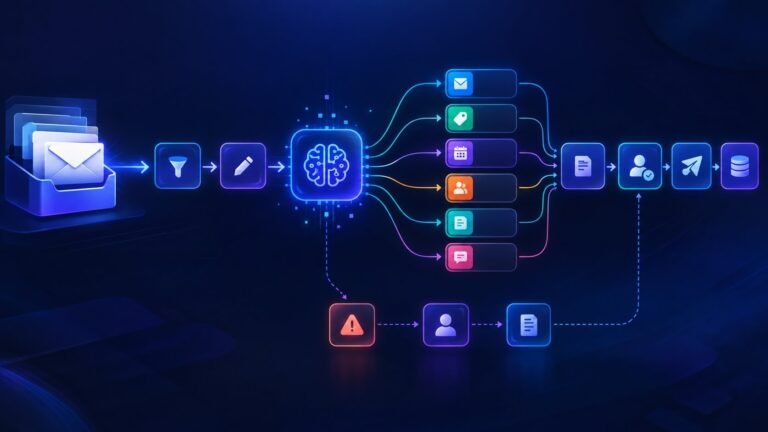
A business receives leads from website forms, social media campaigns, paid advertising, and referral partners. An AI automation agency can automatically collect, enrich, score, and route these leads to the appropriate sales representatives while triggering immediate follow-up actions.
Example 2: Automated Client Onboarding
Professional service providers often spend hours manually onboarding new clients. Automation can collect documents, schedule meetings, create project tasks, and notify stakeholders automatically, creating a more consistent onboarding experience.
Example 3: Automated Reporting and Analytics
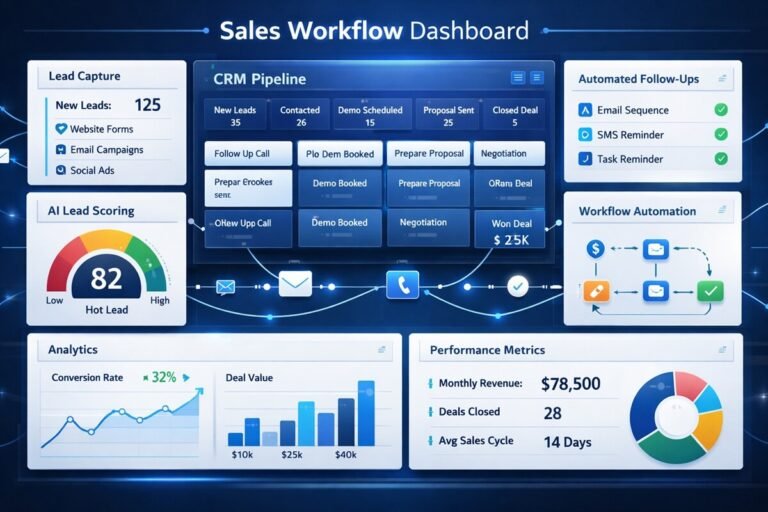
Instead of manually gathering data from multiple platforms, businesses can automatically generate dashboards and scheduled reports that provide leadership teams with real-time visibility into performance metrics and operational trends.
How Much Do AI Automation Agency Services Cost?
Pricing varies depending on project scope, complexity, and support requirements.
Common pricing models include:
Project-Based Pricing
Suitable for clearly defined implementations.
Typical range:
- Small projects: $2,000–$10,000
- Mid-size projects: $10,000–$50,000+
- Enterprise initiatives: $50,000+
Monthly Retainers
Agencies provide ongoing optimization and support.
Typical range:
- $1,000–$10,000+ per month
Custom Enterprise Engagements
Large organizations often require tailored solutions involving multiple departments and extensive integrations.
Costs depend on complexity and business requirements.
How to Choose the Right AI Automation Agency
Not all agencies provide the same level of expertise.
Consider the following factors before making a decision.
Proven Experience
Look for documented projects, case studies, and measurable outcomes.
Process Expertise
Strong agencies understand business operations, not just software implementation.
Technical Capabilities
Evaluate their ability to work with your existing systems and technology stack.
Strategic Thinking
The best agencies focus on business outcomes rather than simply deploying tools.
Ongoing Support
Automation requires continuous optimization as business needs evolve.
Clear Communication
Choose partners who can explain technical concepts in practical business terms.
What ROI Can Businesses Expect?
The return on investment varies by industry and implementation quality, but common benefits include:
- Reduced manual labor
- Faster response times
- Improved lead conversion rates
- Lower operational costs
- Better customer experiences
- Increased employee productivity
- More accurate reporting
- Greater scalability
Many organizations find that even small workflow improvements compound over time, creating significant operational advantages.
Signs Your Business Needs AI Automation Services
Many organizations delay automation until inefficiencies become major operational challenges. Common indicators include:
Repetitive Administrative Work
Employees spend significant time entering data, updating records, and performing routine tasks that could be automated.
Slow Lead Response Times
Delays in responding to prospects often result in lost revenue opportunities.
Disconnected Software Systems
Critical business tools operate independently, creating data silos and duplicated effort.
Reporting Bottlenecks
Teams spend hours compiling reports instead of analyzing insights and making strategic decisions.
Growth-Related Operational Challenges
As businesses expand, manual processes become increasingly difficult to manage efficiently.
When Is the Right Time to Hire an AI Automation Agency?
An AI automation agency may be worth considering if your business experiences any of the following:
- Teams spend excessive time on repetitive tasks
- Lead follow-up is inconsistent
- Customer onboarding is slow
- Reporting requires significant manual effort
- Growth is creating operational bottlenecks
- Existing software systems do not communicate effectively
- Hiring additional staff is becoming expensive
The earlier these challenges are addressed, the easier it becomes to scale efficiently.
Future Trends in AI Automation Services
The AI automation landscape continues to evolve rapidly. Businesses investing in automation today are preparing for several emerging trends.
AI Agents
AI agents are increasingly capable of handling multi-step business processes with minimal human intervention.
Autonomous Workflows
Organizations are moving toward systems that automatically trigger actions, make recommendations, and coordinate processes across departments.
Predictive Operations
Advanced automation platforms can identify patterns and proactively recommend business actions before problems occur. Businesses looking to leverage data-driven forecasting can also explore how AI predictive analytics helps improve strategic decision-making.
Hyper-Personalized Customer Experiences
AI-powered systems enable businesses to deliver highly relevant customer interactions based on behavior, preferences, and engagement history.
Connected Revenue Operations
Future automation strategies will focus on integrating marketing, sales, customer success, and reporting into unified revenue systems.
Frequently Asked Questions
What does an AI automation agency do?
An AI automation agency designs, implements, and optimizes automated business systems that improve efficiency, productivity, and scalability.
How much do AI automation agency services cost?
Costs vary depending on project complexity, integrations, and support requirements. Businesses may choose project-based pricing, monthly retainers, or enterprise engagements.
Can small businesses benefit from AI automation?
Yes. Small businesses often achieve significant efficiency gains by automating repetitive administrative tasks and customer-facing workflows.
How long does implementation take?
Simple projects may be completed within a few weeks, while larger enterprise automation initiatives can take several months.
What business processes can be automated?
Lead management, sales workflows, customer support, onboarding, reporting, CRM updates, scheduling, and internal operations are commonly automated.
Do AI automation agencies replace employees?
Most automation initiatives are designed to reduce repetitive work and improve productivity rather than replace employees entirely.
What industries benefit most from AI automation?
SaaS, professional services, healthcare, real estate, ecommerce, and marketing agencies are among the industries that frequently benefit from automation.
How do I choose the right AI automation agency?
Evaluate industry experience, technical capabilities, process expertise, support offerings, and demonstrated business results.
Final Thoughts
AI automation agency services are no longer limited to large enterprises. Businesses of all sizes are using automation to improve efficiency, reduce operational friction, and create scalable revenue systems.
The most effective agencies do more than implement technology. They design connected processes that align marketing, sales, operations, and customer success into a unified system.
As competition increases and operational efficiency becomes more important, organizations that invest in strategic automation will be better positioned to grow without sacrificing customer experience or profitability.
Whether your goal is faster lead response, streamlined operations, improved reporting, or long-term scalability, partnering with the right AI automation agency can help turn isolated tools into a system that consistently supports business growth.



2 Comments