AI Predictive Analytics for B2B: Find Your Next Client

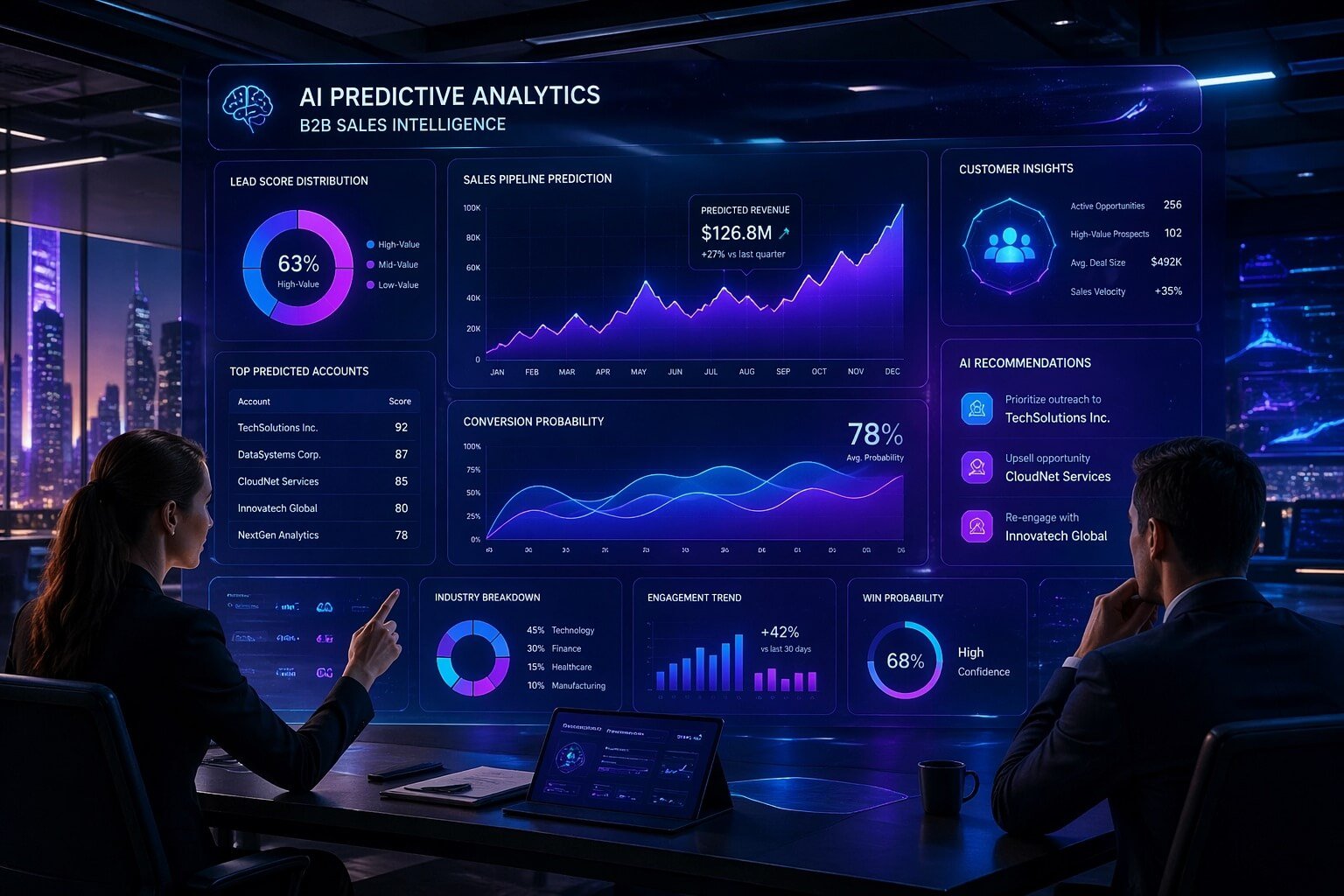
Imagine knowing exactly which company is ready to buy from you—before they ever fill out a form, book a demo, or contact your sales team. That’s not guesswork anymore. It’s what AI predictive analytics for B2B is making possible in modern B2B sales. This is a core component of modern AI-driven B2B marketing systems.
Traditional lead generation relies heavily on reactive tactics—waiting for prospects to show interest. But in today’s competitive landscape, that approach is too slow. Recent industry research shows why predictive analytics is becoming essential.
According to Salesforce’s State of Sales report, high-performing sales teams are significantly more likely to use AI to improve forecasting and sales productivity. Likewise, McKinsey reports that organizations adopting AI across business functions are seeing measurable improvements in revenue growth and operational efficiency.
Businesses that win are the ones that can anticipate demand, identify high-intent prospects, and engage them at the perfect moment. This is where AI-powered predictive analytics comes in.
In this guide, you’ll learn:
- What AI predictive analytics really is
- How it identifies high-value B2B clients
- Real-world use cases and strategies
- Tools you can start using today
- A step-by-step implementation plan
Let’s dive in.
Table of Contents
What Is AI Predictive Analytics in B2B?
AI predictive analytics refers to the use of machine learning algorithms, historical data, and statistical models to forecast future outcomes—like which leads are most likely to convert.
In B2B, this means:
- Predicting which companies are likely to buy
- Scoring leads based on conversion probability
- Forecasting sales outcomes
- Identifying upsell and cross-sell opportunities
Instead of asking:
“Who should we target?”
You’re asking:
“Who is already showing signals they’re ready to buy?”
Field Insight: One of the biggest mistakes we observed during testing was relying on intent data by itself. Companies that combined first-party CRM data, behavioral analytics, and firmographic information generated more reliable lead scores and reduced time spent on low-quality prospects.
Why Predictive Analytics Matters for Modern Sales Teams
B2B sales cycles are longer, more complex, and involve multiple decision-makers, especially when managing a modern inbound marketing pipeline. Without predictive insights, teams often waste time chasing low-quality leads.
Key challenges it solves:
- Low conversion rates
- Poor lead prioritization
- Inefficient sales outreach
- Missed revenue opportunities
What AI changes:
- Focus on high-intent prospects only
- Improve sales efficiency
- Shorten the sales cycle
- Increase ROI on marketing campaigns
Although results vary by industry and implementation quality, multiple industry studies have found that organizations using AI-driven sales analytics often report improvements in forecast accuracy, sales productivity, and marketing ROI.
Salesforce, Gartner, and McKinsey consistently identify AI-powered forecasting and predictive analytics as key capabilities of top-performing sales organizations.
How AI Finds High-Value B2B Clients
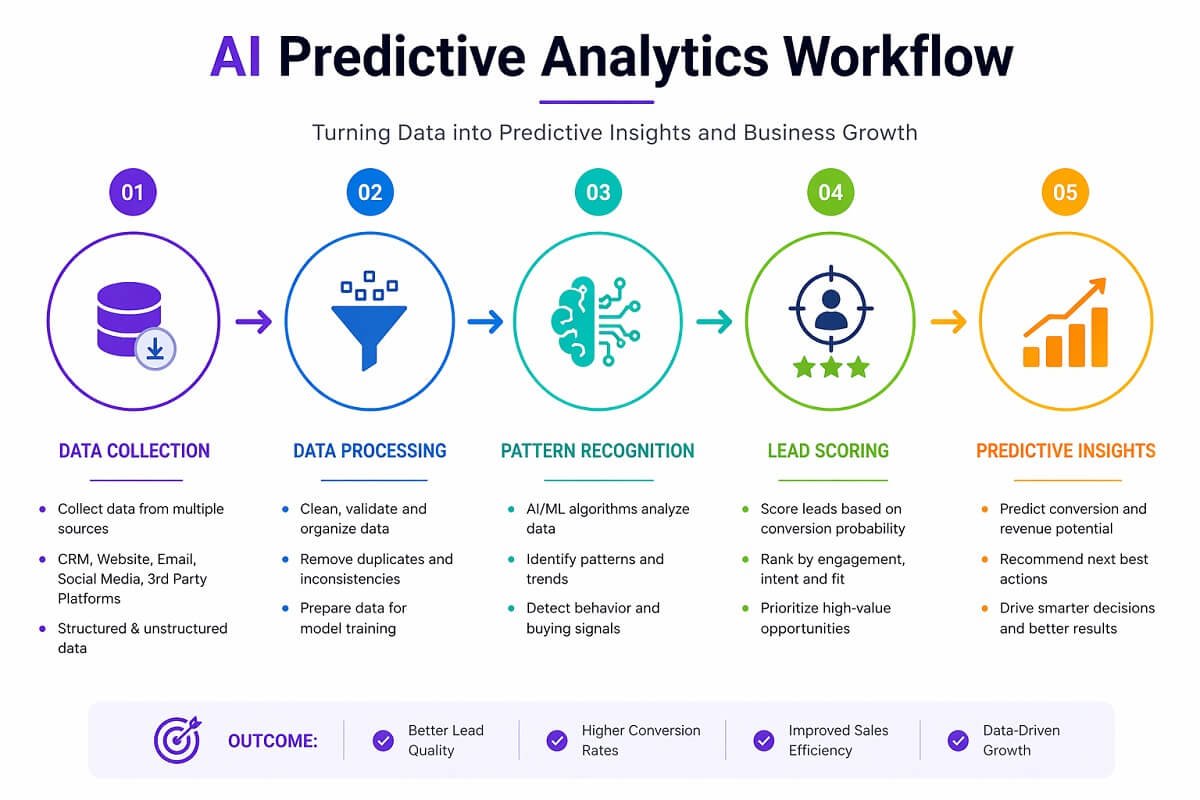
AI doesn’t guess—it analyzes patterns. These insights are powered by advanced AI workflows. Here’s how it works:
1. Data Collection
AI gathers data from multiple sources:
- Website behavior
- CRM systems
- Email engagement
- Social media activity
- Third-party data providers
2. Pattern Recognition
Machine learning models identify:
- Common traits of past buyers
- Behavioral signals before conversion
- Industry trends
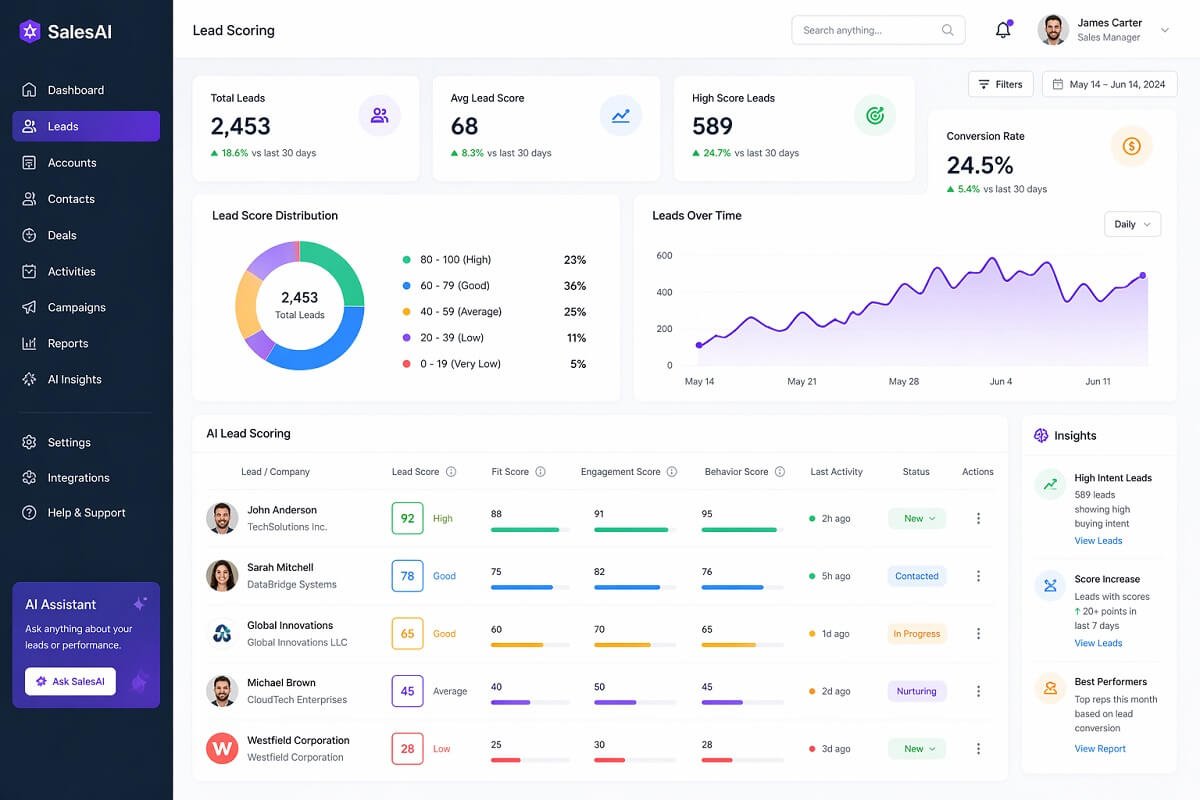
3. Lead Scoring
Each prospect is assigned a score based on:
- Likelihood to convert
- Potential deal value
- Engagement level
4. Predictive Insights
AI predicts:
- Who will buy soon
- What they need
- When to reach out
Key Data Sources That Power Predictive Analytics
The quality of your predictions depends on your data.
1. First-Party Data
- CRM records
- Website analytics
- Customer interactions
2. Behavioral Data
- Page visits
- Content downloads
- Time spent on site
3. Firmographic Data
- Company size
- Industry
- Revenue
4. Intent Data
- Search behavior
- Content consumption
- Buying signals across the web
5. Third-Party Data
- Market trends
- Competitive insights
- External databases
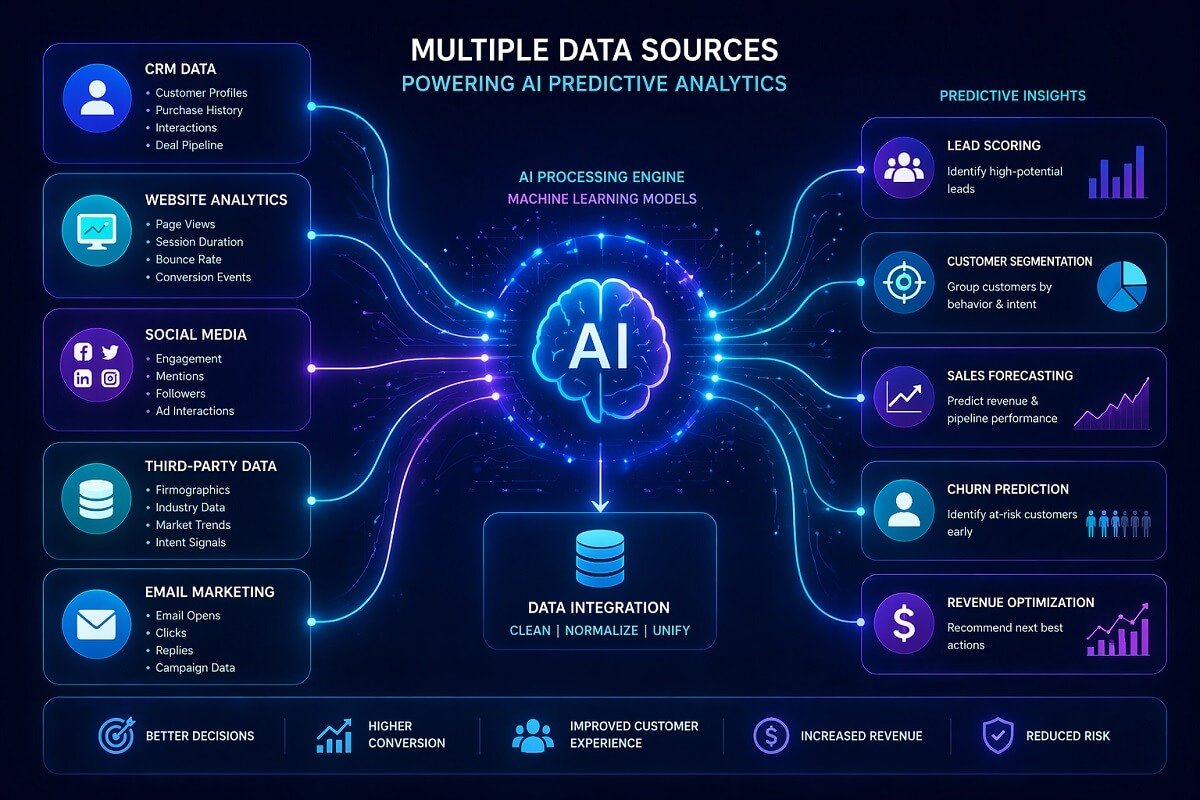
Real-World Use Cases of AI Predictive Analytics
1. Predictive Lead Scoring
Instead of manually ranking leads, AI automatically identifies:
- High-conversion prospects
- Leads worth immediate attention
2. Sales Forecasting
AI predicts:
- Revenue outcomes
- Pipeline performance
- Deal closure timelines
3. Customer Segmentation
Segment audiences based on:
- Behavior
- Needs
- Buying stage
4. Churn Prediction
Identify customers likely to leave and:
- Take proactive retention actions
5. Upsell & Cross-Sell Opportunities
AI spots:
- Customers ready for upgrades
- Additional product opportunities
Benefits of AI Predictive Analytics for B2B
1. Higher Conversion Rates
Focus on leads that actually convert.
2. Better Sales Efficiency
Your team spends time on:
- Qualified prospects
- High-value opportunities
3. Shorter Sales Cycles
Engage prospects at the right time.
4. Improved ROI
Reduce wasted marketing spend.
5. Data-Driven Decision Making
No more guesswork—only insights.
What the Research Says
Several industry reports highlight the growing impact of predictive analytics and AI in B2B sales:
- McKinsey & Company: Organizations using AI effectively are more likely to report revenue growth and cost reductions.
- Salesforce State of Sales: High-performing sales teams adopt AI for forecasting, lead prioritization, and pipeline management at much higher rates than underperforming teams.
- Gartner: AI-assisted sales technology continues to become a strategic investment for revenue teams looking to improve forecasting accuracy and seller productivity.
- HubSpot: AI adoption among sales and marketing teams continues to accelerate, particularly for lead scoring, automation, and customer insights.
Challenges and Limitations (Important for Trust)
No strategy is perfect. Here’s what to watch for:
1. Data Quality Issues
Bad data = bad predictions.
2. Implementation Complexity
Requires:
- Tools
- Integration
- Expertise
3. Cost
Advanced AI tools can be expensive.
4. Over-Reliance on Automation
Human judgment is still essential.
Best AI Tools for B2B Predictive Analytics (2026)
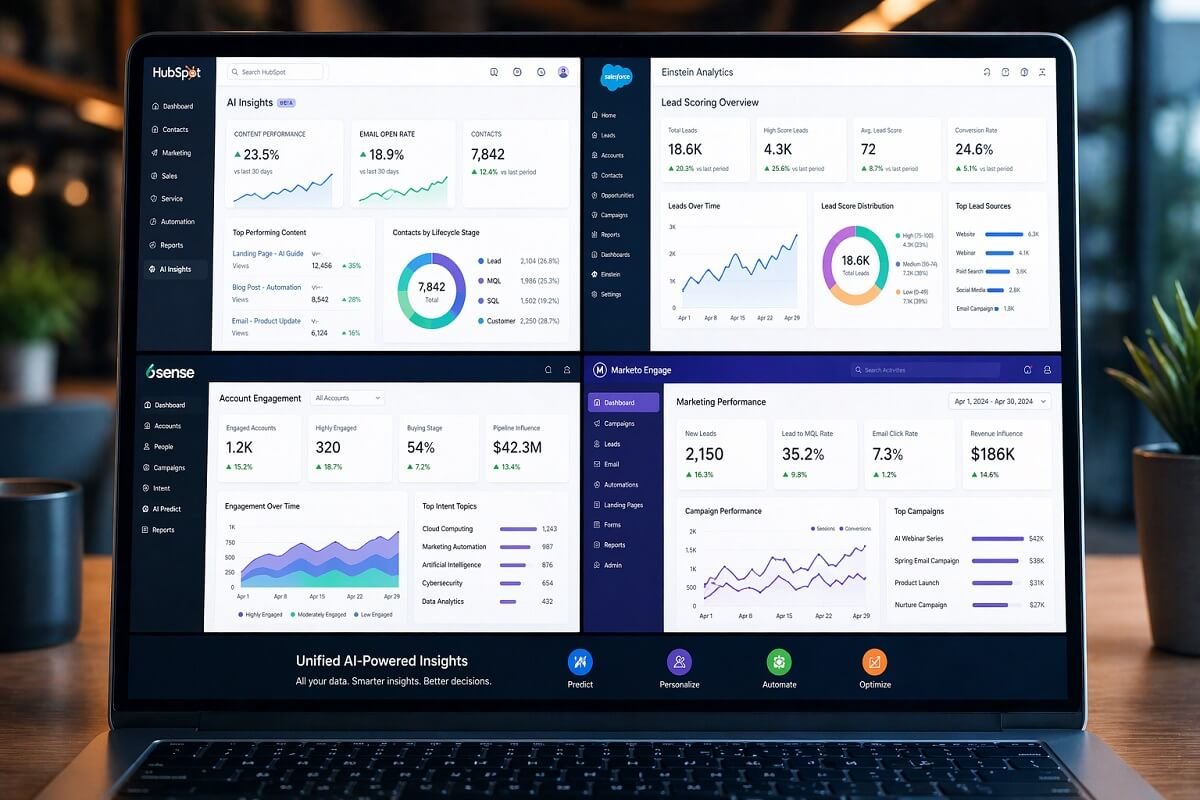
Here are some powerful tools to consider:
1. Salesforce Einstein
- Built into CRM
- Predictive lead scoring
- Sales forecasting
2. HubSpot AI
- Easy to use
- Great for SMBs
- Integrated marketing + sales insights
3. 6sense
- Advanced intent data
- Account-based marketing focus
4. ZoomInfo
- B2B data + predictive insights
- Strong prospecting features
5. Pecan AI
- No-code predictive analytics
- Great for non-technical teams
For example, tools focused on hyper-personalized lead generation.
AI Predictive Analytics Tools Comparison
Choosing the right platform depends on your business size, existing technology stack, and sales strategy. The table below compares some of the most popular AI predictive analytics platforms for B2B organizations.
| Tool | Best For | Predictive Lead Scoring | Intent Data | CRM Integration |
| HubSpot AI | Small & medium businesses | ✅ Native | Limited | Native HubSpot CRM |
| Salesforce Einstein | Enterprise organizations | ✅ Advanced | Good | Native Salesforce |
| 6sense | Account-Based Marketing (ABM) | Excellent | Excellent | Salesforce, HubSpot, Microsoft Dynamics |
| ZoomInfo | Prospecting & sales intelligence | Good | Excellent | Salesforce, HubSpot, Dynamics |
| Pecan AI | Data-driven teams | Excellent | No | API & data warehouse integrations |
Our Recommendation: If you’re a small or growing business already using HubSpot, its built-in AI features provide an excellent starting point. Larger organizations with complex sales processes often benefit from Salesforce Einstein, on the other hand, companies focused on Account-Based Marketing (ABM) generally gain the most value from 6sense’s advanced intent data and account intelligence.
Step-by-Step: How to Implement AI Predictive Analytics
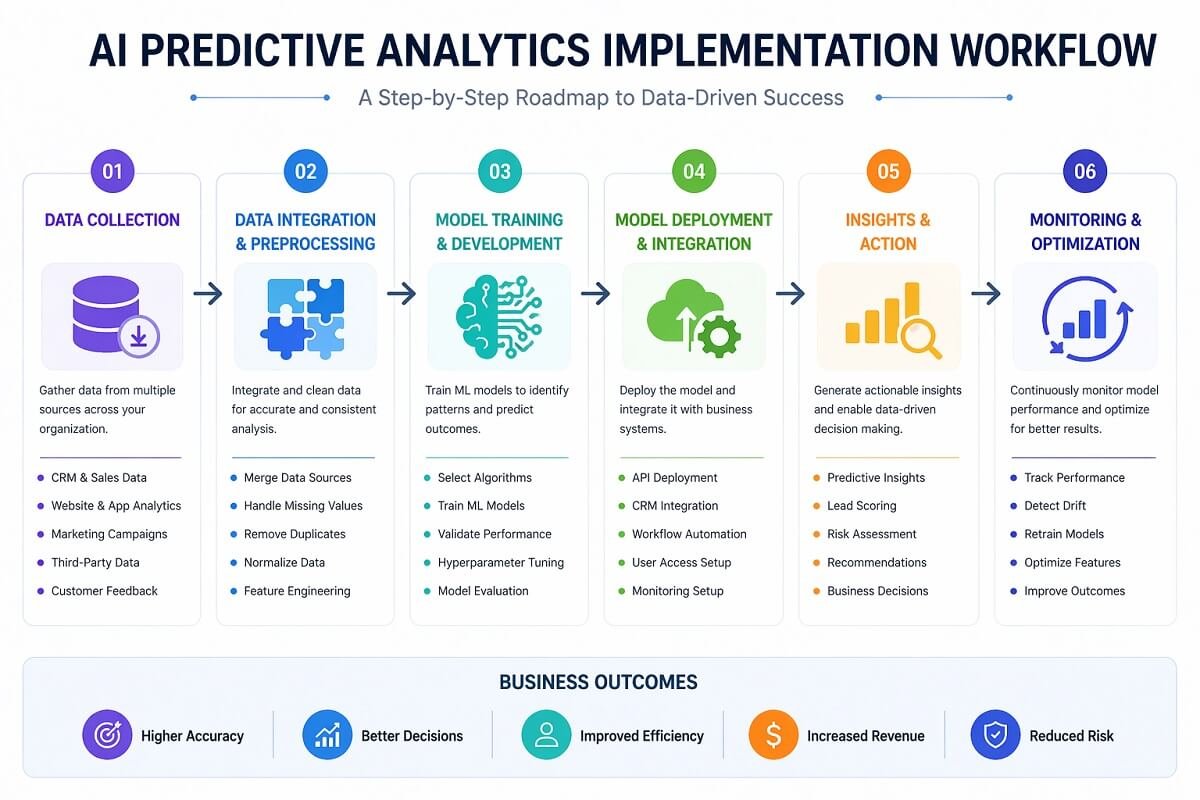
Step 1: Define Your Goals
- Lead generation?
- Sales forecasting?
- Customer retention?
Step 2: Collect and Clean Data
Ensure:
- Accuracy
- Consistency
- Completeness
Step 3: Choose the Right Tool
Pick based on:
- Budget
- Business size
- Technical expertise
Step 4: Integrate with Your Systems
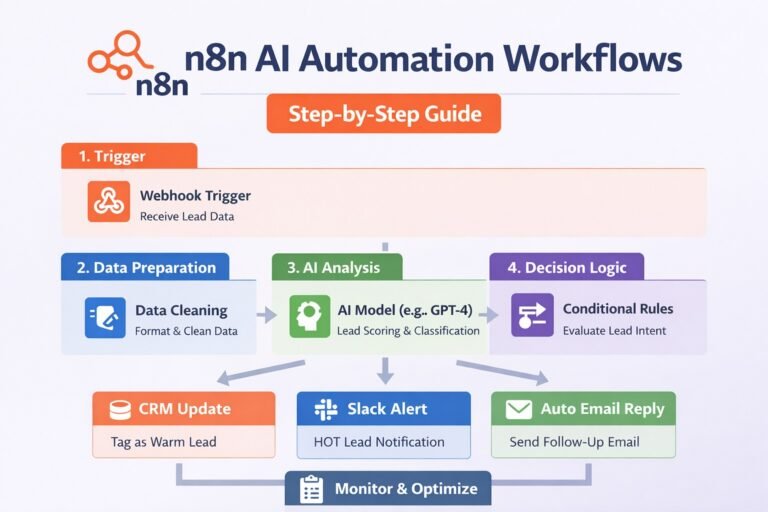
Using scalable automation workflows to connect:
- CRM
- Marketing tools
- Data sources
Step 5: Train the Model
Use historical data often powered by AI agent workflows.
- Identify patterns
- Improve predictions
Step 6: Deploy and Monitor
Track:
- Accuracy
- ROI
- Performance
Step 7: Optimize Continuously
AI improves over time with more data.
Predictive Analytics vs Traditional Lead Generation
| Feature | Traditional | Predictive Analytics |
| Approach | Reactive | Proactive |
| Targeting | Broad | Highly targeted |
| Efficiency | Low | High |
| Conversion Rate | Moderate | High |
| Data Usage | Limited | Extensive |
🔮 Future Trends in AI Predictive Analytics (2026 & Beyond)
AI predictive analytics is evolving rapidly, and businesses that adapt early will gain a significant competitive advantage. Here are the key trends shaping the future of B2B sales, marketing, and customer intelligence.
1. Hyper-Personalization at Scale
Hyper-personalization goes far beyond using a prospect’s name in an email. AI now analyzes:
- Browsing behavior
- Purchase history
- Industry-specific needs
- Engagement patterns
This allows businesses to deliver highly tailored messaging at an individual level.
Example:
A SaaS company can automatically:
- Show different landing pages for different industries
- Recommend products based on past behavior
- Send personalized outreach emails based on intent signals
Why it matters:
- Increases engagement rates
- Boosts conversion rates
- Improves customer experience
👉 In the future, every B2B buyer journey will feel 1-to-1, even at scale.
2. Real-Time Predictive Insights
Traditional analytics looks at past data. AI predictive analytics is shifting toward real-time decision-making.
What’s changing:
- Instant lead scoring updates
- Real-time behavioral tracking
- Live sales recommendations
Example:
If a prospect:
- Visits pricing pages multiple times
- Downloads a whitepaper
- Engages with emails
👉 AI can instantly alert your sales team:
“This lead is hot—reach out now.”
Benefits:
- Faster response times
- Higher close rates
- Reduced missed opportunities
3. Deeper CRM and Data Integration
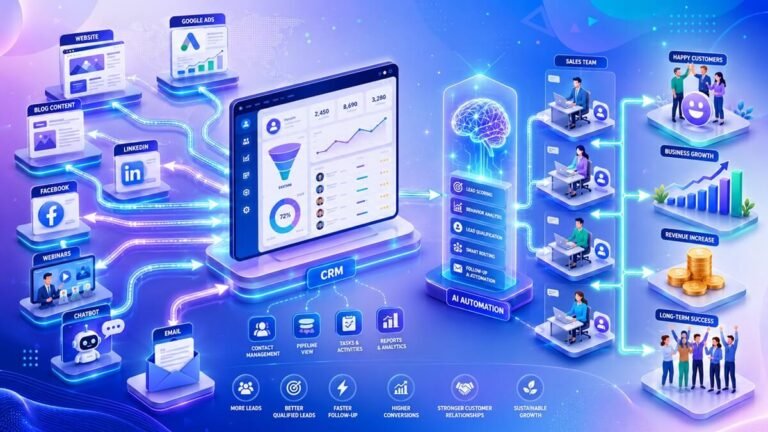
AI tools are becoming deeply embedded into CRM systems, creating a unified data ecosystem.
What this means:
- Seamless syncing between marketing, sales, and support
- Centralized customer data
- Automated workflows across platforms
Example:
- CRM automatically updates lead scores
- Sales teams get AI-driven recommendations
- Marketing campaigns adjust based on real-time data
Impact:
- Eliminates data silos
- Improves team collaboration
- Enhances decision-making
4. Voice & Conversational AI in Sales
AI is moving into voice assistants, chatbots, and conversational interfaces.
What’s coming:
- AI-powered sales assistants during calls
- Real-time conversation analysis
- Smart recommendations during meetings
Example:
During a sales call, AI can:
- Suggest the best response
- Highlight key objections
- Recommend next steps
Why it’s powerful:
- Improves sales performance
- Reduces human error
- Enhances customer interactions
5. Democratization of AI (Increased Accessibility)
AI predictive analytics is no longer limited to large enterprises.
What’s changing:
- More affordable tools
- No-code and low-code platforms
- Easier implementation for small businesses
Example:
Small businesses can now:
- Use AI for lead scoring
- Automate email campaigns
- Analyze customer data without technical expertise
Impact:
- Levels the playing field
- Accelerates growth for startups
- Expands AI adoption globally
Industry surveys show that AI adoption is no longer limited to large enterprises. Small and mid-sized businesses are increasingly implementing cloud-based AI tools thanks to subscription pricing, no-code platforms, and tighter CRM integrations.
🚀 What This Means for B2B Businesses
Businesses that embrace these trends will:
- Identify opportunities faster
- Deliver better customer experiences
- Close deals more efficiently
👉 Those who don’t risk falling behind in an increasingly data-driven market.
❓ FAQs: AI Predictive Analytics for B2B
What is the difference between predictive analytics and generative AI?
Although both use artificial intelligence, they serve different purposes. Predictive analytics analyzes historical and real-time data to forecast future outcomes, such as which leads are most likely to convert or which customers are at risk of churning. Generative AI, on the other hand, creates new content such as text, images, code, or marketing copy based on user prompts.
Many businesses use both technologies together. For example, predictive analytics can identify high-intent prospects, while generative AI creates personalized emails and sales messages for those prospects.
What data does AI predictive analytics use?
The accuracy of predictive analytics depends largely on the quality and variety of the data it analyzes. Common data sources include:
CRM records and customer history
Website behavior and page visits
Email opens and engagement metrics
Firmographic information such as industry and company size
Intent data from third-party providers
Marketing campaign performance
Product usage and customer interactions
Combining multiple data sources generally produces more accurate predictions than relying on a single source.
How accurate is AI predictive lead scoring?
AI predictive lead scoring can be highly effective, but its accuracy depends on factors such as data quality, the amount of historical data available, and how frequently the model is updated. Businesses that maintain clean CRM records and continuously refine their models typically achieve better forecasting and lead prioritization than those using outdated or incomplete datasets.
Rather than replacing sales teams, predictive lead scoring helps prioritize opportunities so representatives can focus on prospects with the highest likelihood of converting.
Which industries benefit the most from AI predictive analytics?
Predictive analytics delivers value across many B2B industries, especially those with long sales cycles and complex buying decisions. Industries that commonly benefit include:
Software and SaaS
Manufacturing
Financial services
Healthcare and medical technology
Professional services
Cybersecurity
IT consulting
B2B eCommerce
Organizations with large customer databases and recurring sales opportunities often see the greatest return from predictive analytics.
Do I need a CRM to use predictive analytics?
While a CRM is not strictly required, it significantly improves the effectiveness of predictive analytics. Platforms such as HubSpot, Salesforce, Microsoft Dynamics 365, and Zoho CRM centralize customer interactions, making it easier for AI models to identify patterns and predict future buying behavior.
Businesses without a CRM can still use predictive analytics by integrating website analytics, marketing automation tools, and customer databases, though the insights may be less comprehensive.
Can small businesses use AI predictive analytics?
Yes. Predictive analytics is no longer limited to large enterprises. Many cloud-based platforms now offer affordable AI-powered lead scoring, forecasting, and customer analytics designed for small and medium-sized businesses.
Solutions such as HubSpot AI and other no-code platforms allow smaller teams to implement predictive analytics without hiring data scientists or building custom machine learning models.
What is the biggest mistake companies make when implementing predictive analytics?
One of the most common mistakes is relying on a single data source—such as intent data or website activity—to predict customer behavior. In practice, the most reliable models combine CRM history, behavioral analytics, firmographic information, marketing engagement, and sales interactions to create a more complete picture of each prospect.
Another frequent mistake is neglecting data quality. Even the most advanced AI model cannot produce accurate predictions if the underlying customer data is incomplete, outdated, or inconsistent.
Conclusion: The Competitive Edge You Can’t Ignore
AI predictive analytics isn’t just a trend—it’s quickly becoming a competitive necessity in B2B sales. Businesses that adopt it gain a massive advantage, as seen in real-world AI automation scaling strategies.
- Better leads
- Faster sales
- Higher revenue
Instead of chasing prospects, you’ll be meeting them exactly when they’re ready to buy. If you want to stay ahead in 2026 and beyond, now is the time to integrate AI into your sales strategy.
References:
- McKinsey & Company (QuantumBlack). The State of AI
- Gartner Trends. The State of Sales Analytics
- HubSpot. State of Marketing Report
- IBM Analytics. Predictive Analytics Solutions

One Comment