After Testing 20+ AI Workflow Tools, This Is the Only One We Recommend in 2026


Most AI workflow tools look impressive on the surface. Drag-and-drop builders, “AI-powered automation,” endless integrations—yet when you actually try to run real business workflows at scale, most of them fall apart.
Over the past months, we tested more than 20 AI workflow automation platforms across marketing, operations, lead generation, and internal systems. The goal was simple:
Find the one tool that actually works reliably in real business environments—not just demos.
After extensive testing, one platform consistently outperformed everything else in flexibility, scalability, and automation depth.
That tool is n8n.
Testing at a Glance:
| Platforms tested | 20+ AI workflow automation tools |
| Testing focus | Real-world business workflows |
| Use cases | Marketing, operations, lead generation, internal systems |
| Key criteria | Reliability, flexibility, AI integration, extensibility, cost, deployment |
| Stress tests | Failure recovery, workflow delays, API limitations, multi-tool integrations |
Table of Contents
Why We Tested 20+ AI Workflow Tools

The AI workflow automation space in 2026 has become extremely saturated. Almost every platform now markets itself as an “AI-powered automation system,” but in practice, most tools are still early-stage wrappers around basic workflow logic.
Across marketing sites, SaaS landing pages, and product demos, the messaging is almost identical:
- “Automate everything with AI”
- “Eliminate manual work completely”
- “Build intelligent workflows in minutes”
However, once you move beyond demo environments and into real business operations, the limitations become obvious. To get an accurate picture, we didn’t rely on marketing claims, feature lists, or short trial runs. Instead, we tested over 20 AI workflow tools across live business scenarios, including:
- Lead generation and enrichment pipelines
- Multi-step CRM automation systems
- Content production workflows with AI generation
- Internal reporting and data synchronization flows
- Cross-platform API-based automation chains
Each tool was stress-tested under realistic conditions where failures, delays, and edge cases naturally occur.
The goal was not to find the most popular tool or the most feature-rich dashboard. The goal was to identify which platform actually survives real operational complexity without breaking down.
“To understand the gap between marketing claims and real-world performance, we also studied how AI workflows actually work in business systems before building our testing framework.”
What We Were Actually Looking For
To ensure the evaluation was consistent and unbiased, we defined strict performance criteria before testing began. Each tool was assessed based on how well it performed under real-world business load—not controlled demos.
| Evaluation factor | What we evaluated |
| Workflow reliability | Stability as workflows became more complex |
| Business flexibility | Ability to handle different business use cases |
| AI integration | LLMs, AI agents, and AI-driven workflow execution |
| Custom logic | Scripting, APIs, branching, and advanced logic |
| Cost efficiency | Pricing as workflow volume and complexity increased |
| Deployment control | Self-hosting, data control, security, and infrastructure flexibility |
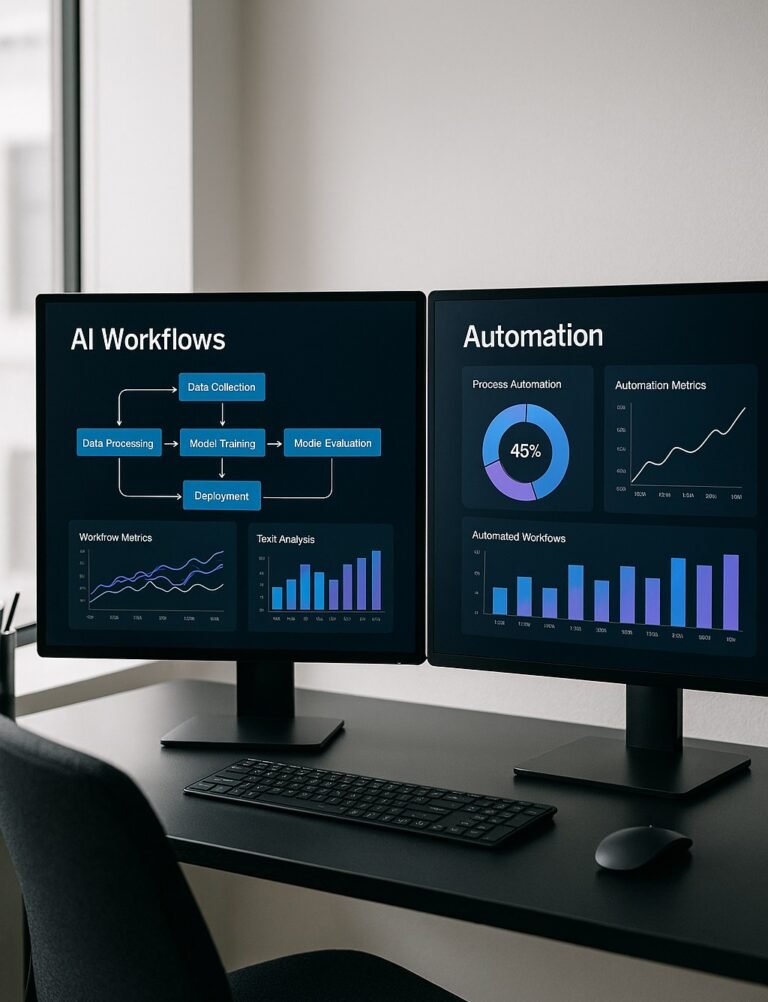
“To better understand system structure and dependencies, we also referenced AI workflow diagrams during our evaluation process.”
1. Workflow reliability at scale
We evaluated whether workflows continued functioning smoothly when:
- multiple steps were chained together
- API calls were repeated at scale
- conditional logic became complex
Many tools worked fine for simple automations but failed when workflows became layered or interdependent.
2. Flexibility across business use cases
We tested whether a single platform could handle multiple operational areas, including:
- marketing automation
- sales pipelines
- internal operations
- data processing workflows
Most tools were heavily optimized for one category but struggled when applied outside their primary use case.
3. AI integration capability
We assessed how deeply each tool integrated with modern AI systems, including:
- LLM API connections
- AI agent-style workflow execution
- dynamic prompt-based automation
In many cases, “AI features” were limited to simple text generation steps rather than true workflow intelligence.
4. Custom logic and extensibility
A critical factor was whether users could go beyond predefined blocks and templates.
We looked for:
- custom scripting or logic layers
- API-level flexibility
- advanced branching conditions
This is where many no-code tools hit a hard ceiling.
5. Cost efficiency at scale
We analyzed how pricing behaved as workflows expanded in:
- execution volume
- number of integrations
- complexity of automation chains
Some tools were affordable at entry level but became expensive very quickly at scale.
6. Deployment control and infrastructure flexibility
We also evaluated whether tools offered:
- self-hosting options
- data control and security flexibility
- enterprise-grade deployment options
This became increasingly important for serious business use cases.
Key Observation From Testing
Across all 20+ platforms, a consistent pattern emerged: Most tools performed well in isolated scenarios, but very few maintained stability, flexibility, and cost efficiency when all evaluation criteria were applied together. These criteria are commonly used when evaluating modern platforms in the category of AI workflow automation tools.
Testing Methodology (Real-World Workflows Only)
We didn’t rely on demo use cases. These scenarios reflect common AI automation examples businesses are increasingly using across sales, marketing, operations, and customer workflows.
Each tool was tested using:
- Lead enrichment workflows
- Content automation pipelines
- CRM data syncing systems
- Multi-step AI agent workflows
- API-based automation chains
We also stress-tested:
- failure recovery
- workflow delays under load
- API rate limitations
- multi-tool integrations
This is where most platforms broke down.
We also tested more advanced setups such as AI agent workflow systems that simulate multi-step decision-making processes.
The Problem With Most AI Workflow Tools
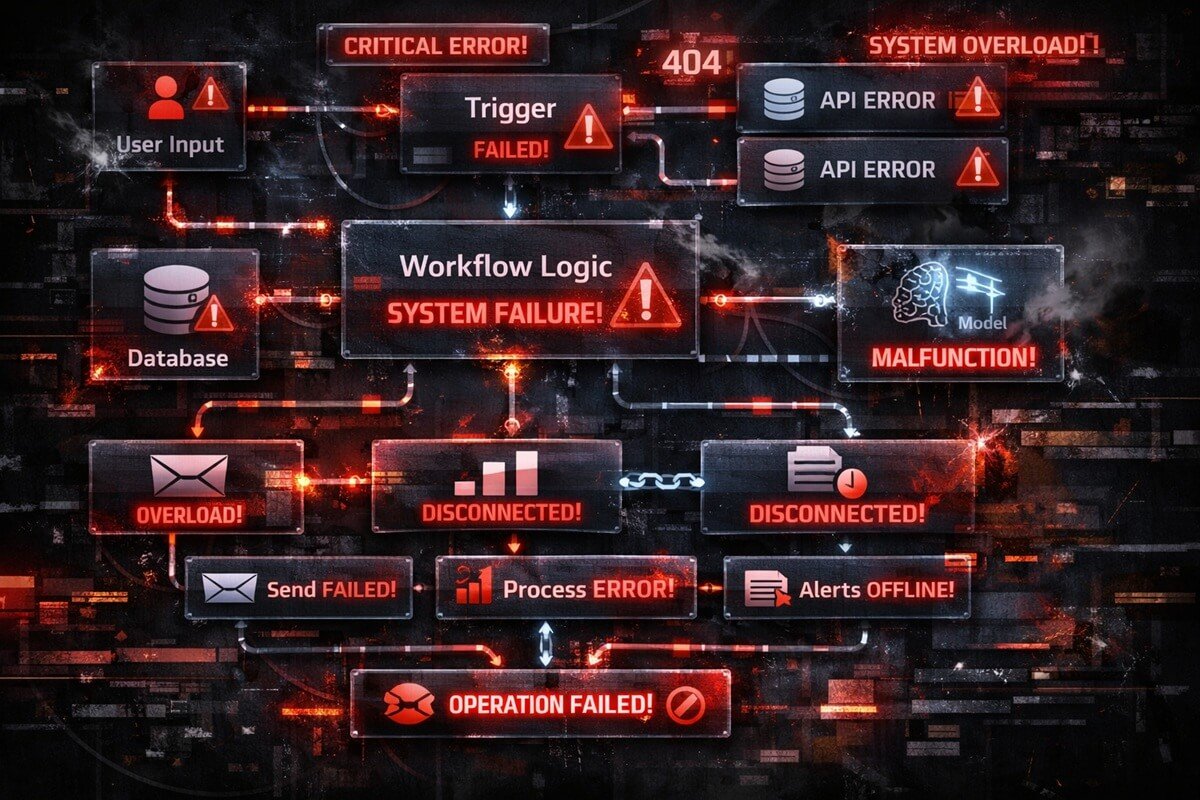
Across the 20+ AI workflow platforms we tested, a consistent set of structural weaknesses started to appear. While most tools are marketed as “end-to-end automation systems,” in real usage they tend to break down once workflows move beyond simple linear automation.
These issues weren’t isolated—they repeated across multiple categories of tools, regardless of pricing, popularity, or feature sets.
1. No-code limitations appear quickly
Most platforms perform well in the early stages of setup, especially for basic automations. However, once workflows require conditional logic, branching paths, or multi-layered decision trees, the limitations become obvious.
At that point, users are forced to either simplify their workflows or work around platform constraints—both of which reduce real automation value.
2. “AI features” are often surface-level
A common pattern across tools labeled as “AI-powered” is that the AI layer is minimal.
In most cases, AI functionality is limited to:
- text generation steps inside workflows
- basic summarization or formatting
- standalone prompts without deeper system integration
What’s missing is true workflow intelligence, where AI actively influences decision-making across multiple steps in a process.
3. Scaling introduces structural cost and complexity issues
Many tools are cost-effective at the entry level, but the pricing model changes significantly once workflows begin scaling.
We observed that costs typically increase due to:
- execution-based pricing models
- per-task or per-operation billing
- add-on charges for advanced features or integrations
As workflows become more complex, the economics of automation often stop making sense.
4. Vendor lock-in reduces long-term flexibility
A less visible but critical issue is how tightly most platforms lock users into their ecosystem.
Once workflows are built inside a closed system:
- migrating them becomes difficult
- rebuilding logic elsewhere is time-consuming
- switching platforms often means starting from scratch
This creates long-term dependency on a single provider, which limits operational flexibility.
Overall pattern
When viewed together, these limitations explain why many businesses struggle to scale automation effectively beyond initial experimentation.
Most platforms are optimized for setup speed—not long-term workflow resilience.
Why We Recommend n8n
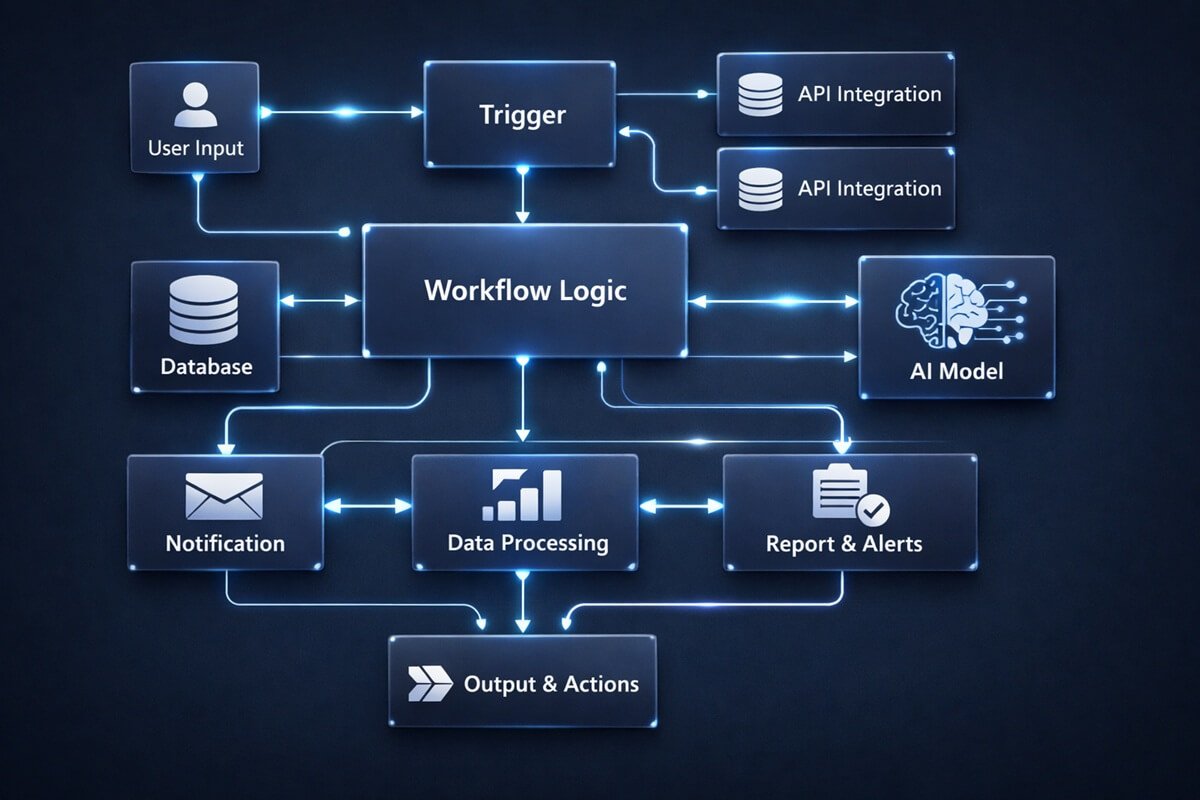
Among all the tools tested, n8n consistently stood apart—not as another automation app, but as a full workflow orchestration system designed for complex, scalable automation architecture.
Unlike typical SaaS automation tools that prioritize simplicity, n8n is built for depth and control. For a deeper breakdown of how it compares with other major platforms, see our Zapier vs Make vs n8n comparison.
⚙️ Full workflow control without artificial limits
n8n allows users to design deeply customized workflows with advanced logic structures.
Instead of forcing users into rigid templates, it enables:
- multi-branch conditional workflows
- dynamic execution paths
- complex dependency chains
This makes it suitable for real operational systems rather than simple task automation.
🔗 Deep integration across systems and APIs
One of n8n’s strongest advantages is its ability to connect almost anything:
- APIs
- databases
- SaaS tools
- internal systems
- custom services
This flexibility removes the common bottleneck of limited native integrations.
🧠 AI-native workflow architecture
Unlike tools that simply “add AI features,” n8n allows AI to be embedded directly into workflows as a functional component.
This enables:
- agent-based workflows
- dynamic decision-making using LLMs
- AI-assisted routing and processing
Instead of being an add-on, AI becomes part of the system logic.
🏗 Self-hosting and infrastructure control
n8n also supports self-hosted deployment, giving teams full control over:
- data privacy
- infrastructure setup
- security policies
- performance optimization
Teams considering self-hosted deployment can also review the official n8n documentation for deployment and hosting details.
This is especially important for businesses with compliance or scaling requirements. Teams managing sensitive business data should also follow AI workflow security best practices when designing, deploying, and maintaining automated systems.
📈 Built for scalable automation systems
Unlike tools that degrade under complexity, n8n maintains stability as workflows grow in:
- size
- logic depth
- integration count
- execution volume
This makes it suitable for long-term automation infrastructure rather than short-term experimentation. For teams that want to start with proven structures before building more complex systems, AI workflow templates can also provide a useful starting point.
When AI workflows handle sensitive information, teams should also consider established security guidance such as the OWASP Top 10 for Large Language Model Applications.
Where Most Other Tools Consistently Fell Short
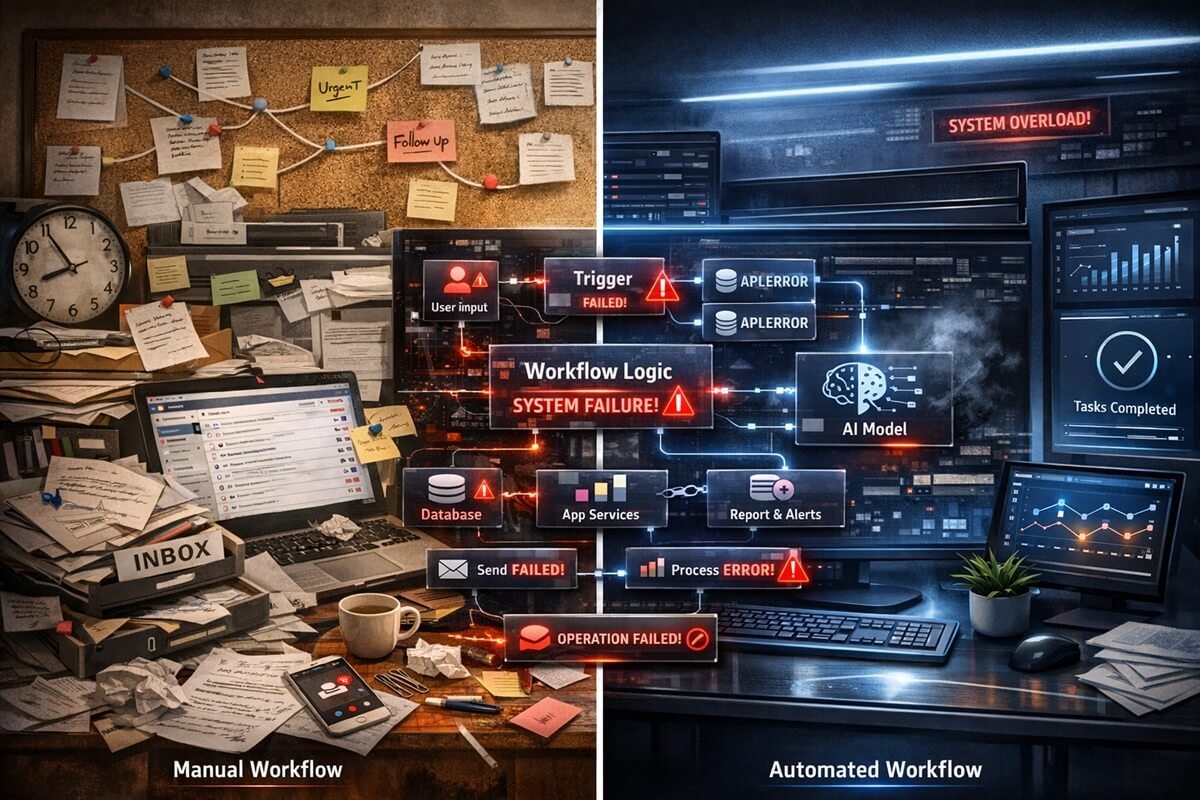
Rather than evaluating each competitor individually, the broader pattern across platforms was more important.
Across categories, we repeatedly observed:
- Advanced workflow logic became difficult to maintain or unavailable
- AI functionality lacked true system-level integration
- Complex automations required unnecessary workarounds
- Costs increased significantly as usage scaled
- Execution environments were tightly controlled or limited
These issues were not tool-specific—they were structural limitations common across most SaaS automation platforms.
Real Use Cases Where n8n Excelled
Here’s where n8n delivered strong results in testing:
Marketing automation
- lead capture → enrichment → CRM sync → email triggers
AI content workflows
- content generation → review → scheduling → distribution
Sales automation
- inbound lead processing → qualification → assignment → follow-ups
Internal operations
- reporting pipelines
- database syncing
- alert systems
In each case, workflows remained stable and customizable.
Who This Tool Is NOT For
To be clear, n8n is not the right choice for everyone.
It may NOT be ideal if you:
- want a purely plug-and-play SaaS tool with zero setup
- don’t want to handle workflow design complexity
- need extremely beginner-friendly UI only
This is a power tool, not a simplified app.
Final Verdict
After testing 20+ AI workflow tools across real business scenarios, one conclusion is clear: Most tools are built for simplicity. n8n is built for control, scale, and flexibility. If your goal is long-term automation infrastructure—not just simple task automation—n8n was the strongest overall fit for complex, scalable AI workflow automation.
FAQs: Our Recommended AI Workflow Tools
What is the best AI workflow tool in 2026?
Based on real-world testing across multiple automation scenarios, n8n stands out as the most flexible and scalable AI workflow tool for businesses in 2026.
How should businesses evaluate an AI workflow automation tool?
This fits the article extremely well because you already evaluate platforms using six criteria: reliability, flexibility, AI integration, extensibility, cost efficiency, and deployment control.
Is n8n better than no-code automation tools?
Yes, for advanced workflows. While no-code tools are easier for beginners, n8n provides significantly more control, customization, and scalability for complex automation systems.
Can AI workflow tools replace manual business processes?
They can automate a large portion of repetitive tasks such as lead processing, reporting, and content workflows, but strategic decision-making still requires human input.
Is n8n suitable for beginners?
It has a learning curve compared to drag-and-drop tools, but once set up, it provides far more flexibility than most beginner-friendly platforms.
Why do most AI workflow tools fail at scale?
Most tools fail due to limited logic control, API restrictions, and pricing that increases rapidly as workflows grow in complexity.
What makes an AI workflow scalable for business use?
This is also highly relevant because the article repeatedly discusses workflow complexity, integrations, execution volume, infrastructure control, and long-term scalability.



One Comment