
AI Voice Search SEO in 2026: How to Optimize for AI-Powered Search


AI-powered search is changing how customers discover businesses. Instead of typing short keywords into Google, users increasingly ask conversational questions through voice assistants and AI-powered search tools such as ChatGPT, Gemini, Siri, and Alexa.
For businesses, this shift requires more than traditional SEO. Success now depends on creating content that answers natural language questions, uses structured data, demonstrates expertise, and can be easily interpreted by AI systems. However, many businesses already using AI tools are seeing massive efficiency gains from our special support—especially in automation and lead generation.
At WorkflowAISuite, we’ve found that businesses achieve the best results when voice search optimization becomes part of an automated SEO workflow rather than a one-time task. AI can continuously identify conversational search trends, generate FAQ content, update schema markup, and monitor search performance without requiring constant manual effort.
In this guide, you’ll learn how AI voice search works, why it matters, and how to build a scalable optimization workflow for long-term search visibility.
Table of Contents
What Is AI Voice Search?
AI voice search allows users to perform searches using spoken commands instead of typing. It relies on technologies like:
- Natural Language Processing (NLP)
- Machine Learning
- Speech Recognition
Voice assistants analyze spoken queries, interpret intent, and deliver concise answers—often pulled from top-ranking web pages.
Popular platforms include:
- Smartphones
- Smart speakers
- In-car assistants
- Wearable devices
Unlike traditional search, voice queries are longer, more conversational, and intent-driven.
AI Voice Search vs Traditional Voice Search vs AI Search
| Feature | Traditional Search | Voice Search | AI Search |
|---|---|---|---|
| Input | Typed keywords | Spoken questions | Natural conversation |
| Results | 10+ links | Usually one answer | AI-generated summaries |
| Ranking | SEO | SEO + Featured Snippets | SEO + Entities + Authority |
| Focus | Keywords | Intent | Context & expertise |
| Examples | Google Search | Siri, Alexa | ChatGPT, Gemini |
How AI Voice Search Works
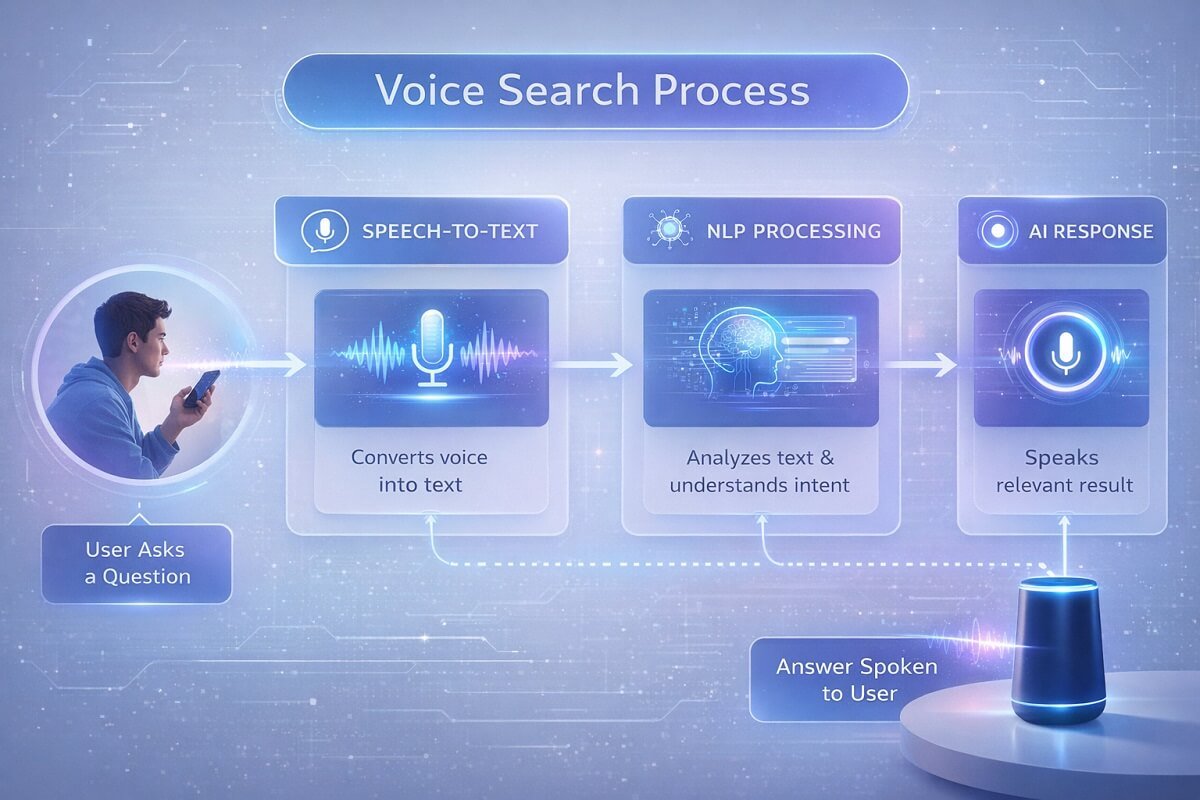
Understanding how voice search works helps you optimize more effectively.
Here’s a simplified process:
- User speaks a query
- AI converts speech into text
- NLP analyzes intent and context
- Search engine retrieves the best answer
- AI delivers a spoken response (often from a featured snippet)
The key takeaway:
👉 Voice search prioritizes accuracy, clarity, and relevance over quantity of results
AI Voice Search Optimization Workflow
Customer Questions
↓
AI Keyword Research
↓
Intent Analysis
↓
Content Creation
↓
Schema Generation
↓
Internal Linking
↓
Publishing
↓
Performance Monitoring
↓
Continuous AI Improvements
To build AI workflows for businesses and teams, companies can automate keyword research, content optimization, schema updates, and performance monitoring.
Why Businesses Should Care About AI Voice Search
AI voice search is changing how customers discover products, services, and local businesses. Instead of typing a few keywords into a search engine, people are increasingly asking complete questions using smartphones, smart speakers, in-car assistants, and AI-powered search tools. This shift means businesses must optimize not only for traditional search engines but also for AI systems that deliver direct answers and recommendations.
Better Customer Discovery
Voice searches are generally more conversational and specific than typed searches. Rather than searching for “CRM software,” a user might ask, “What’s the best AI CRM for a small business?“ These detailed queries reveal stronger intent and help AI search systems match users with businesses that provide the most relevant answers.
Companies that create clear, informative content are more likely to be discovered during these high-value searches. And A well-planned CRM implementation ensures valuable search-driven leads are properly managed.
AI Assistants Are Becoming Business Recommenders
Modern AI assistants such as ChatGPT, Gemini, Siri, and Alexa increasingly help users compare products, find service providers, and answer purchasing questions. Instead of displaying a long list of links, these systems often summarize information from trusted websites and recommend a small number of businesses.
If your content demonstrates expertise, answers customer questions directly, and uses structured data, your business has a better chance of being included in these AI-generated responses.
Higher Purchase Intent
Many voice searches are made when users are ready to take action. Questions like “Where can I buy an ergonomic office chair today?” or “Which AI automation platform is best for a growing business?“ often indicate that the user is close to making a purchasing decision.
Optimizing for these conversational, intent-driven queries can attract visitors who are more likely to become customers than those using broad informational searches. For B2B companies, combining conversational search optimization with an AI-driven B2B marketing system can help identify high-intent prospects, personalize outreach, and automate customer journeys across multiple channels.
Stronger Local Visibility
Voice search plays a significant role in local discovery. Users frequently ask questions such as “Find a digital marketing agency near me”, “which is the best AI automation agency” or “What coffee shop is open now?” Search engines rely on accurate business information, customer reviews, and location relevance to provide these recommendations.
Keeping your business profile updated and creating location-specific content can significantly improve your visibility for local voice searches.
AI-Generated Recommendations Reward Quality Content
AI-powered search systems evaluate more than keywords. They look for content that clearly answers questions, demonstrates expertise, and is well organized. Businesses that publish comprehensive guides, FAQs, comparison pages, and helpful resources are more likely to become trusted sources for AI-generated recommendations. This makes content quality and topical authority more important than ever.
Automation Creates a Competitive Advantage
Keeping content optimized for AI voice search doesn’t have to be a manual process. AI-powered workflows can automatically identify new conversational search queries, generate FAQ content, recommend internal links, monitor ranking changes, and highlight pages that need updates.
Businesses that need help designing and implementing these systems can work with AI automation agency services to build customized workflows that connect SEO, marketing, sales, and customer operations.
If business organizations combine voice search optimization with automation, businesses can maintain accurate, up-to-date content while reducing the time spent on repetitive SEO tasks. As AI-powered search continues to evolve, companies that automate these processes will be better positioned to attract customers, improve visibility, and stay ahead of competitors.
How AI Voice Search Changes SEO
Here’s a clear breakdown of how AI voice search is reshaping SEO:
📊 Impact of AI Voice Search on SEO
| Factor | Traditional Search | AI Voice Search | SEO Impact |
| Query Style | Short keywords | Conversational queries | Focus on natural language |
| Search Length | 1–3 words | 5–10+ words | Target long-tail keywords |
| Intent | Broad | Highly specific | Better targeting required |
| Results | Multiple links | Often one answer | Position #1 is critical |
| Clicks | Multiple | Often zero-click | Optimize for direct answers |
| Devices | Desktop/mobile | Mobile + smart devices | Mobile-first is essential |
| Local Search | Typed | Spoken | Local SEO becomes critical |
| Content Style | Keyword-heavy | Conversational | Write naturally |
| Snippets | Optional | Essential | Optimize for featured snippets |
| Speed | Important | Critical | Faster pages win |
| Schema | Helpful | Powerful | Use structured data |
Summary:
AI voice search shifts SEO from keywords → intent, and links → answers.
Voice Search SEO Ranking Factors
Ranking in AI voice search depends on more than traditional keyword optimization. Modern search systems evaluate page quality, topical authority, user experience, and how easily AI can understand your content. Instead of optimizing for a single ranking signal, businesses should build pages that provide accurate, trustworthy, and conversational answers.
The table below summarizes the factors that have the greatest impact on AI-powered voice search visibility.
| Priority | Ranking Factor | Why It Matters | Best Practices |
|---|---|---|---|
| ⭐⭐⭐⭐⭐ | Helpful, Intent-Focused Content | AI assistants prefer pages that answer questions clearly and completely. | Write conversational content, answer questions directly, and organize information with headings. |
| ⭐⭐⭐⭐⭐ | Topical Authority | AI favors websites that demonstrate expertise across an entire subject. | Publish supporting articles and connect them with strong internal linking. |
| ⭐⭐⭐⭐☆ | Structured Data | Schema helps search engines interpret your content more accurately. | Implement FAQ, HowTo, Article, Product, and LocalBusiness schema where appropriate. |
| ⭐⭐⭐⭐☆ | Page Experience | Fast, mobile-friendly pages improve usability and search performance. | Optimize Core Web Vitals, compress images, and use responsive design. |
| ⭐⭐⭐⭐☆ | Trust & Credibility | AI systems are more likely to recommend authoritative sources. | Add expert author bios, cite reliable sources, and earn quality backlinks. |
| ⭐⭐⭐☆☆ | Local SEO | Many voice searches have local intent. | Optimize your Google Business Profile, maintain consistent business information, and encourage reviews. |
1. Helpful, Intent-Focused Content
Voice assistants are designed to answer questions—not simply match keywords. Create content that solves specific problems using clear, conversational language. Organize answers under descriptive headings and provide concise summaries before expanding into more detail.
2. Build Topical Authority
Rather than relying on a single article, create a content cluster around AI search and voice search. Supporting articles, comparison guides, FAQs, and tutorials help search engines understand that your website is a trusted resource on the topic. Strong internal linking reinforces these relationships and improves crawlability.
3. Use Structured Data
Schema markup provides additional context that helps search engines interpret your content. While schema alone won’t guarantee rankings, it can improve eligibility for rich results and make it easier for AI systems to identify key information.
Focus on implementing:
- FAQ Schema
- HowTo Schema
- Article Schema
- Product Schema (where relevant)
- LocalBusiness Schema
4. Optimize Technical Performance
Voice search users expect immediate answers, making page performance essential. Ensure your website loads quickly, works well on mobile devices, and provides a secure browsing experience.
Key improvements include:
- Optimize Core Web Vitals
- Use next-generation image formats
- Enable browser caching
- Minimize unnecessary JavaScript
- Maintain HTTPS across your site
5. Demonstrate Trust and Expertise
AI-powered search increasingly prioritizes trustworthy sources. Publish content written or reviewed by experts, reference reputable sources, keep articles updated, and build authoritative backlinks to strengthen your site’s credibility.
6. Strengthen Local SEO
Many voice searches include local intent, such as “near me” or “open now.” If your business serves a specific location, optimize your Google Business Profile, maintain consistent contact information, and encourage customer reviews to improve local visibility.
Building a Winning AI Voice Search Strategy
The future of voice search SEO is less about optimizing for individual keywords and more about becoming the most reliable source for a topic. Businesses that combine high-quality content, technical SEO, structured data, topical authority, and AI-powered content workflows will be best positioned to earn visibility across voice assistants and AI-driven search experiences.
Keyword Strategy for Voice Search
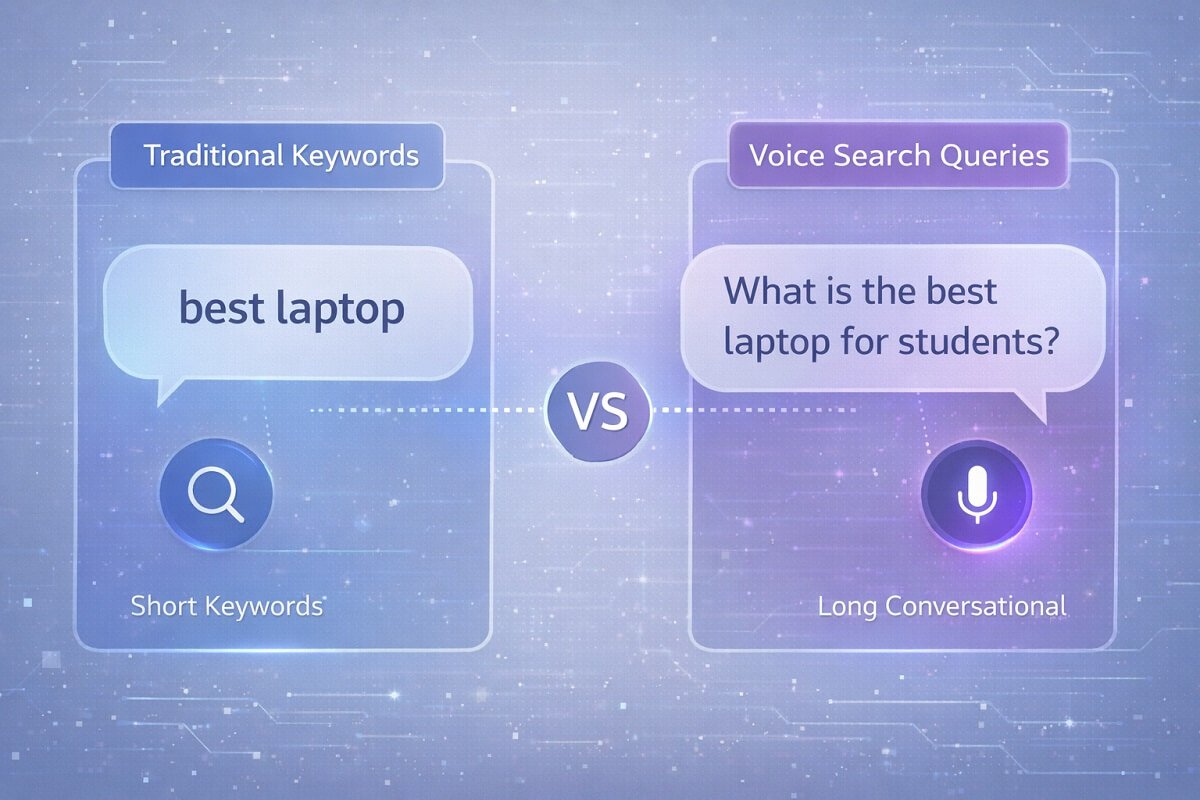
Traditional keyword research is no longer enough.
Focus on:
✅ Long-Tail Keywords
Example:
- “best laptops” → “What is the best laptop for students under $1000?”
✅ Question-Based Queries
Use:
- What
- How
- Where
- Why
✅ Conversational Phrases
Write how people speak, not how they type.
How AI Can Automate Voice Search SEO
| Task | AI Automation |
|---|---|
| Keyword research | AI clusters questions |
| FAQ creation | Generate FAQs |
| Schema | Auto-generate markup |
| Internal links | AI recommendations |
| Content updates | AI refreshes old pages |
| Reporting | Weekly SEO reports |
How to Find Voice Search Keywords
- Google “People Also Ask”
- Auto-suggestions
- Forums and communities
- Customer support questions
👉 These reveal real conversational queries.
Optimize for Featured Snippets
Voice assistants often pull answers from featured snippets.
How to optimize:
- Answer questions directly in 40–60 words
- Use lists and bullet points
- Structure content with clear headings
- Add definitions and summaries
Example:
What is voice search SEO?
Voice search SEO is the process of optimizing content to appear in voice-based search results by focusing on conversational keywords, structured data, and direct answers.
Local Voice Search Optimization

Voice search is heavily local.
Optimize by:
- Creating and optimizing your Google Business Profile
- Using “near me” keywords
- Adding location-specific pages
- Encouraging customer reviews
Example query:
“Best coffee shop near me”
👉 If you’re not optimized locally, you miss high-intent traffic.
Content Optimization for Voice Search

Your content must sound natural.
Tips:
- Use conversational tone
- Write shorter sentences
- Answer questions clearly
- Avoid jargon
Add FAQ sections
These are perfect for voice queries.
Technical SEO for Voice Search
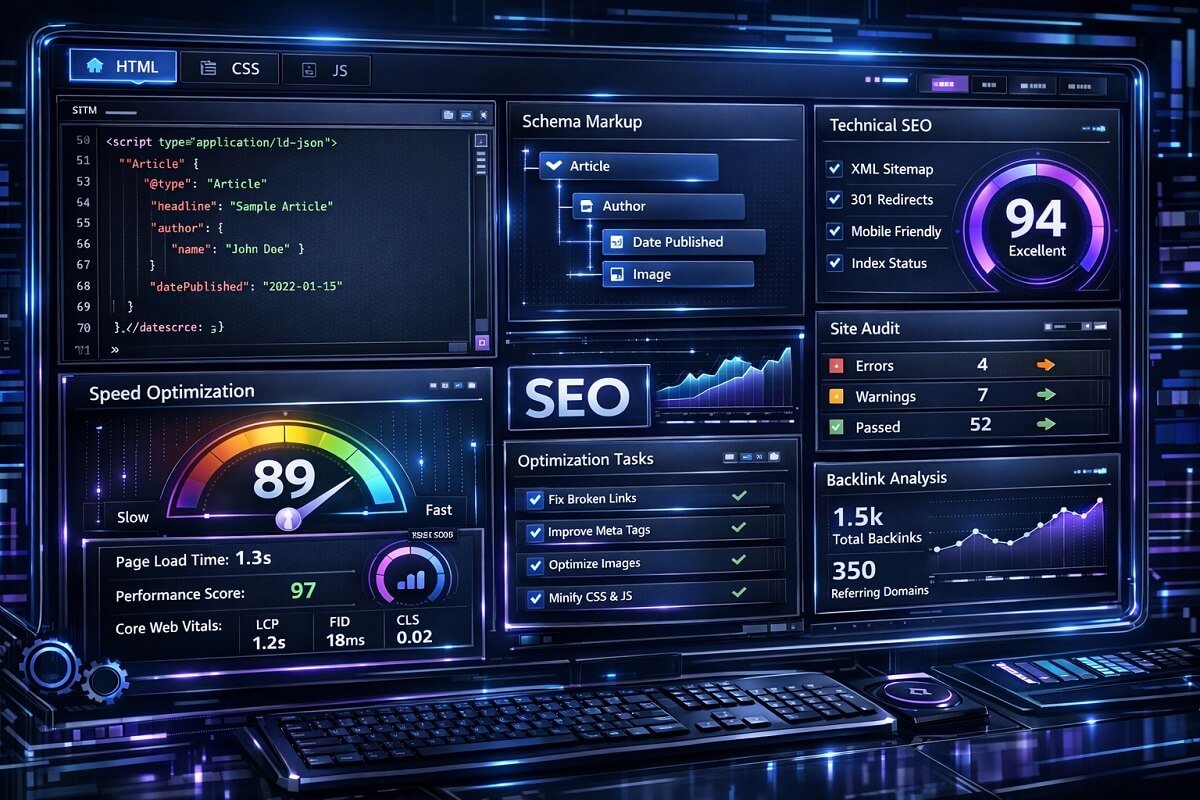
Key elements:
- Schema markup (FAQ, HowTo, LocalBusiness)
- Fast loading speed
- Secure site (HTTPS)
- Clean site structure
Automating technical SEO tasks can save hours and reduce errors.
Voice Commerce and Buying Behavior
Voice search is influencing purchasing decisions.
Users now ask:
- “What’s the best product under $50?”
- “Where can I buy this near me?”
What this means:
- Optimize for product queries
- Provide clear comparisons
- Include pricing and benefits
Businesses using AI-driven outreach and automation are seeing significantly higher conversion rates.
Common Mistakes to Avoid
- ❌ Keyword stuffing
- ❌ Ignoring mobile optimization
- ❌ Writing robotic content
- ❌ Skipping structured data
- ❌ Not targeting featured snippets
Avoiding these alone can put you ahead of many competitors.
The Future of AI Search (2026–2030)
Search is evolving beyond traditional search engines. Over the next several years, AI-powered assistants will increasingly become the primary way people discover information, compare products, and make purchasing decisions. Instead of scrolling through pages of search results, users will expect AI to deliver personalized, context-aware answers in seconds.
Businesses that optimize only for traditional SEO risk losing visibility as AI-driven search experiences continue to grow.
AI Agents Will Become Digital Research Assistants
The next generation of AI agents will do far more than answer simple questions. They will research products, compare prices, summarize reviews, book appointments, and even complete purchases on behalf of users.
For businesses, this means content must be structured so AI agents can easily understand products, services, pricing, FAQs, and business information. Clear content, structured data, and trustworthy information will become increasingly important as AI agents act on behalf of customers.
Personal AI Assistants Will Shape Search Behavior
AI assistants are becoming more personalized by learning user preferences, previous interactions, locations, and schedules. Rather than providing identical results to everyone, future AI assistants will recommend businesses and products based on each person’s unique needs and context.
Businesses should focus on creating comprehensive, trustworthy content that answers customer questions across every stage of the buying journey instead of relying solely on exact-match keywords.
ChatGPT Search, Gemini, and Perplexity Are Expanding Search Beyond Google
Search is no longer limited to traditional search engines. AI-powered platforms such as ChatGPT Search, Google Gemini, and Perplexity combine information from multiple trusted sources to generate complete answers instead of simply displaying a list of links.
To improve visibility across these platforms, businesses should:
- Publish expert, well-researched content.
- Build topical authority with related articles.
- Use descriptive headings and structured data.
- Keep information accurate and regularly updated.
- Strengthen internal linking between related topics.
These practices help AI systems better understand your content and increase the likelihood of being referenced in AI-generated responses.
Voice Commerce Will Continue to Grow
Voice assistants are becoming shopping assistants. Consumers increasingly use voice commands to compare products, check prices, reorder household items, and discover local businesses.
To prepare for voice commerce, businesses should:
- Create detailed product pages.
- Answer common buying questions.
- Publish comparison guides.
- Display accurate pricing and availability.
- Optimize local business information.
Providing complete and trustworthy product information improves the chances of being recommended during voice-assisted purchasing decisions.
Multimodal Search Will Become the New Standard
Future AI search will combine text, voice, images, videos, and documents into a single search experience. Users may ask a spoken question while uploading an image or referencing a screenshot, allowing AI to understand multiple forms of information simultaneously.
Businesses should diversify their content by publishing:
- High-quality images with descriptive alt text.
- Infographics and comparison charts.
- Explainer videos.
- Step-by-step tutorials.
- Structured FAQs.
Creating content in multiple formats makes it easier for AI systems to understand and present your information across different search experiences.
Search Results Will Become More Personalized
AI search engines increasingly tailor responses using context such as location, search history, device type, and previous interactions. Rather than showing identical rankings to every user, AI delivers recommendations that are most relevant to the individual.
This makes it even more important to create content that serves specific audiences, answers real customer questions, and demonstrates expertise within your industry.
Businesses Should Automate Their AI Search Strategy
As AI search evolves, manual SEO processes become harder to scale. Businesses can gain a competitive advantage by using AI-powered workflows to monitor emerging search trends, identify conversational keywords, generate FAQ content, recommend internal links, update schema markup, and refresh existing articles.
Automation enables teams to keep content current and optimize continuously without manually reviewing every page, making it easier to adapt as AI search platforms evolve.
What Businesses Should Do Next
Between 2026 and 2030, success in search will depend on optimizing for AI-driven discovery rather than traditional rankings alone. Businesses that build topical authority, create helpful content, implement structured data, and automate ongoing optimization will be better positioned to appear in AI-generated answers across voice assistants, AI search platforms, and future intelligent agents.

WorkflowAISuite Insight
As we’ve built AI automation workflows for SEO, one recurring pattern has been that pages with conversational FAQs, clear heading structures, and structured data are easier for AI systems to interpret than pages optimized only around short keywords. We’ve also found that automating recurring tasks—such as content audits, internal linking suggestions, and schema validation—helps keep large websites updated more efficiently than relying solely on manual reviews.
Conclusion
AI voice search optimization is no longer a standalone SEO tactic. It should be integrated into an ongoing AI-powered content workflow that identifies new conversational queries, updates content, maintains structured data, and measures performance.
If you want to stay competitive, combining voice search optimization with AI automation tools is essential for long-term growth. Businesses that automate these processes using AI workflow Templates are better positioned to stay visible as AI-powered search continues to evolve.
Frequently Asked Questions (FAQs)
How do AI agents affect voice search?
AI agents are making voice search more conversational and task oriented. Instead of returning a list of links, they can compare products, summarize information, book appointments, and recommend businesses based on user intent. To improve visibility, businesses should publish comprehensive, trustworthy content that AI systems can easily interpret.
How does ChatGPT Search use websites?
ChatGPT Search generates answers by referencing information from trusted websites rather than simply listing search results. Well-structured, up-to-date, and authoritative content has a better chance of being cited or used to generate responses, making quality and topical authority increasingly important.
Can schema markup improve AI voice search?
Yes. While schema markup is not a direct ranking factor, it helps search engines and AI systems understand your content more accurately. Implementing FAQ, HowTo, Article, Product, and LocalBusiness schema can improve eligibility for rich results and AI-generated answers.
How can businesses automate voice search SEO?
Businesses can use AI-powered workflows to discover conversational keywords, generate FAQ content, recommend internal links, update structured data, monitor rankings, and identify pages that need refreshing. Automation reduces manual work while helping maintain long-term search visibility.
What type of content performs best in AI voice search?
Content that directly answers user questions, uses natural language, demonstrates expertise, and is organized with clear headings performs best. Comprehensive guides, comparison articles, FAQs, and step-by-step tutorials are especially effective because they align with conversational search behavior.
Does voice search still matter in 2026?
Yes. Voice search continues to grow alongside AI-powered search platforms such as ChatGPT Search, Google Gemini, and Perplexity. While traditional voice assistants remain important, businesses should now optimize for the broader AI search ecosystem, where conversational queries, structured data, and topical authority influence visibility.